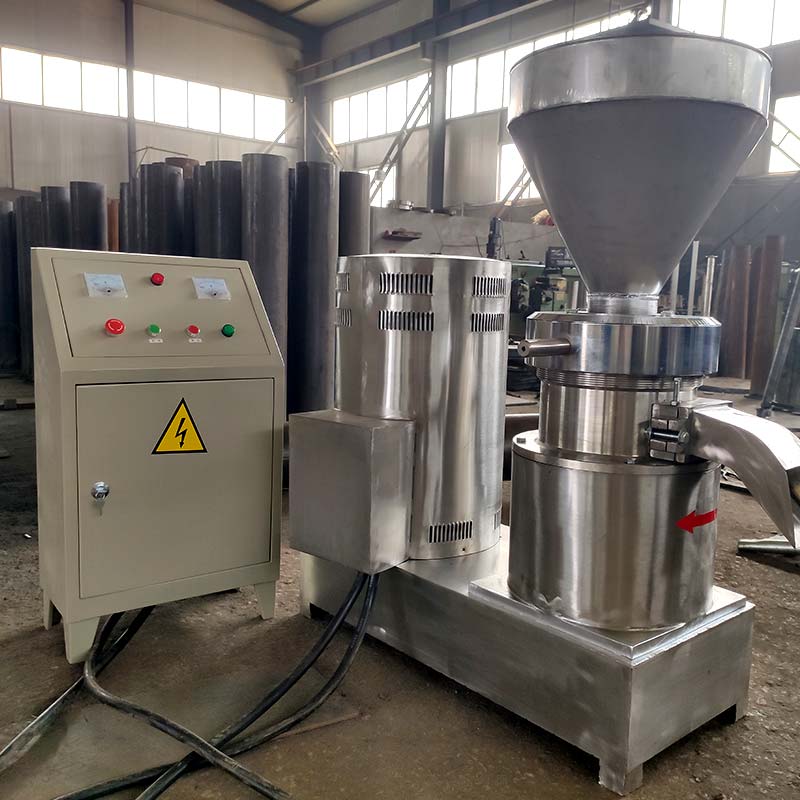
Daftar Isi
Pendahuluan

A colloid mill machine is a specialized equipment designed to reduce particle size and create uniform dispersions or emulsions. As a manufacturer, we have seen firsthand how essential these machines are in industries such as food processing, pharmaceuticals, cosmetics, and even chemicals. The main function of a colloid mill is to apply high shear forces to materials, breaking them down into fine particles and ensuring a smooth and consistent product.
Key components include a rotor, stator, feed inlet, and output nozzle. The rotor spins at high speeds, forcing materials through the narrow gap between the rotor and stator. This high shear action allows for efficient mixing, homogenization, and emulsification. Using a reliable colloid mill can significantly improve product quality, reduce production time, and increase overall operational efficiency.
Understanding Different Types of Colloid Mill Machines
Colloid mill machines come in various types, each tailored for specific applications:
- High Shear Colloid Mill: Ideal for creating fine emulsions and dispersions in food, pharmaceutical, and cosmetic industries.
- Industrial Colloid Mill: Designed for large-scale production with higher throughput and continuous operation capabilities.
- Small Tabletop Colloid Mill: Suitable for labs, pilot-scale production, or small businesses.
- Manual vs Electric Colloid Mill: Electric models offer higher consistency and efficiency, while manual options are cost-effective for small batches.
Understanding the type of colloid mill that matches your business needs is the first step in selecting the right machine.
Factors to Consider Before Choosing a Colloid Mill Machine
Selecting the right colloid mill involves multiple considerations:
- Production Capacity: Ensure the machine can handle your required throughput without compromising quality.
- Kompatibilitas Material: For food, pharmaceutical, or cosmetic applications, choose food-grade stainless steel mills. For chemical applications, materials must resist corrosion and wear.
- Power and Efficiency: Consider machines with energy-efficient motors to reduce operational costs.
- Ease of Maintenance: Quick disassembly and cleaning are essential to avoid contamination and reduce downtime.
Colloid Mill Machine Materials and Build Quality
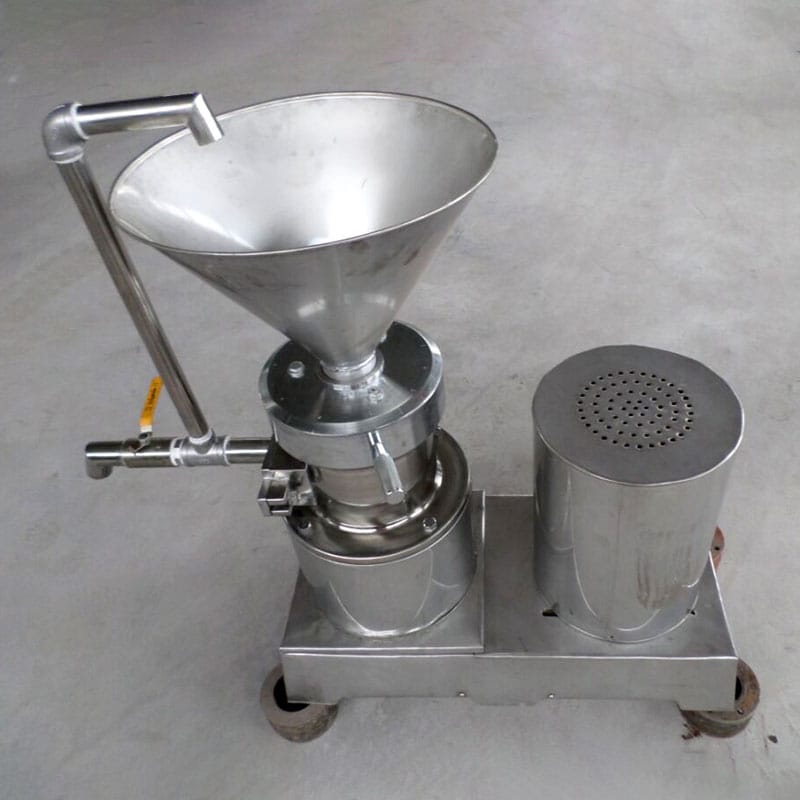
The materials and construction of a colloid mill significantly affect its performance and longevity. Most modern machines use stainless steel, which offers durability, corrosion resistance, and easy cleaning—essential for industries requiring hygiene standards.
Other components, such as wear-resistant rotors and stators, ensure consistent particle size and longer machine life. Investing in high-quality materials minimizes maintenance costs and ensures reliable performance in demanding production environments.
Applications of Colloid Mill Machines
Colloid mill machines have versatile applications across multiple industries:
- Industri Makanan: Preparing sauces, pastes, jams, peanut butter, and emulsions.
- Industri Farmasi: Producing ointments, creams, suspensions, and other fine dispersions.
- Cosmetic Industry: Manufacturing lotions, gels, and skincare products with smooth consistency.
- Industrial Applications: Chemical dispersions, paints, and other materials requiring uniform particle size.
Comparison Table of Colloid Mill Applications:
| Industri | Typical Products | Recommended Colloid Mill Type | Material Requirement |
|---|---|---|---|
| Makanan | Sauces, pastes, jams | High Shear / Industrial | Food-grade stainless steel |
| Pharmaceutical | Creams, ointments, suspensions | Small Tabletop / Industrial | Food-grade or pharma-grade |
| Cosmetic | Lotions, gels, creams | High Shear / Electric | Stainless steel, corrosion-resistant |
| Industri | Paints, chemical dispersions | Industrial / High Capacity | Wear-resistant stainless steel |
Comparing Colloid Mill Machine Suppliers
When purchasing a colloid mill, it is essential to evaluate suppliers carefully. Consider:
- Manufacturer Reputation: Look for companies with years of experience in producing reliable machines.
- After-Sales Support: Warranty, spare parts availability, and technical assistance are critical.
- Reviews and Case Studies: Testimonials and case studies from other businesses provide insight into real-world performance.
As a manufacturer, we ensure that our clients receive not only top-quality machines but also comprehensive support throughout the machine’s lifecycle.
Tips for Optimizing Colloid Mill Machine Performance
To get the best results from your colloid mill machine, consider these tips:
- Feed materials at the correct rate to avoid overloading.
- Adjust rotor speed according to material viscosity for optimal particle size.
- Regularly clean and maintain the machine to ensure consistent output quality.
- Monitor product characteristics and adjust operational parameters accordingly.
Proper operation enhances efficiency, product consistency, and reduces wear and tear.
Cost Considerations and ROI

Investing in a colloid mill machine requires evaluating initial cost versus long-term benefits. Industrial and high shear models may require higher upfront investment but offer higher throughput, reduced production time, and superior product quality. Energy efficiency, maintenance expenses, and machine longevity should all be factored into your ROI calculations. Selecting the right model for your business scale ensures cost-effective and efficient production.
Kesimpulan
Choosing the right colloid mill machine is a critical decision that impacts product quality, production efficiency, and business profitability. As a manufacturer, we recommend considering machine type, material, capacity, and supplier reliability to ensure your investment meets your production goals. Whether your business operates in food, pharmaceuticals, cosmetics, or industrial applications, selecting a high-quality colloid mill machine guarantees consistent results and long-term value.
For businesses looking to optimize production and achieve superior results, contacting a trusted manufacturer can provide tailored recommendations and solutions designed to meet your specific needs.
PERTANYAAN YANG SERING DIAJUKAN
Q1: What is a colloid mill machine used for?
A1: A colloid mill machine is used to grind, emulsify, and homogenize materials into fine particles. It is widely applied in food, pharmaceutical, cosmetic, and chemical industries.
Q2: How does a colloid mill machine work?
A2: The machine works by forcing materials through a narrow gap between a high-speed rotor and a stationary stator. This creates shear forces that break down particles and produce smooth, uniform products.
Q3: What types of colloid mill machines tersedia?
A3: Common types include high shear colloid mills, industrial colloid mills, and small tabletop models. Electric and manual options are also available depending on production needs.
Q4: How do I choose the right colloid mill machine for my business?
A4: Consider production capacity, material compatibility, machine type, and build quality. For food or pharmaceutical applications, stainless steel mills are recommended for hygiene and durability.
Q5: How do I maintain a colloid mill machine?
A5: Regular cleaning, monitoring rotor and stator wear, and following manufacturer maintenance guidelines will ensure consistent performance and extend machine lifespan.