Daftar Isi
Pendahuluan
What is a High Speed Dispersion Machine
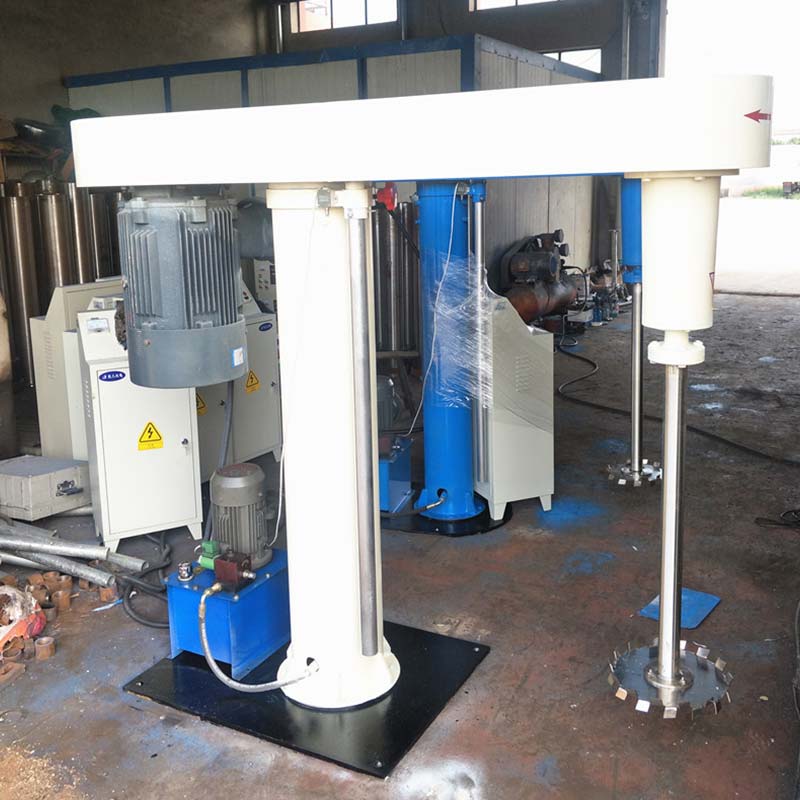
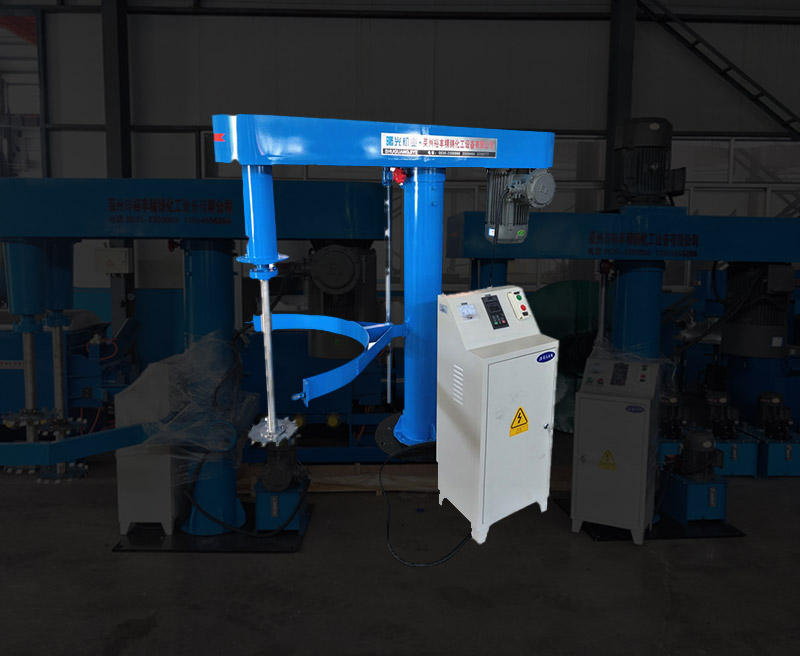
A high speed dispersion machine is a sophisticated piece of industrial mixing equipment designed to create homogeneous mixtures by rapidly dispersing solid particles into liquid media. Unlike conventional mixers, these machines operate at extremely high rotational speeds—typically ranging from 500 to 3000 RPM—generating intense shear forces that break down agglomerates and ensure uniform distribution of particles throughout the mixture.
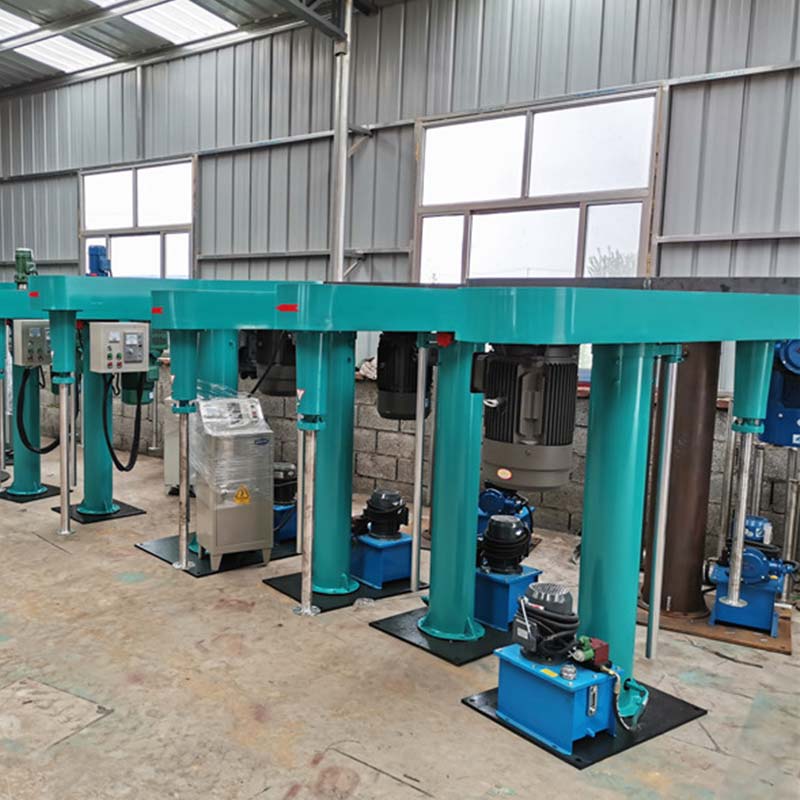
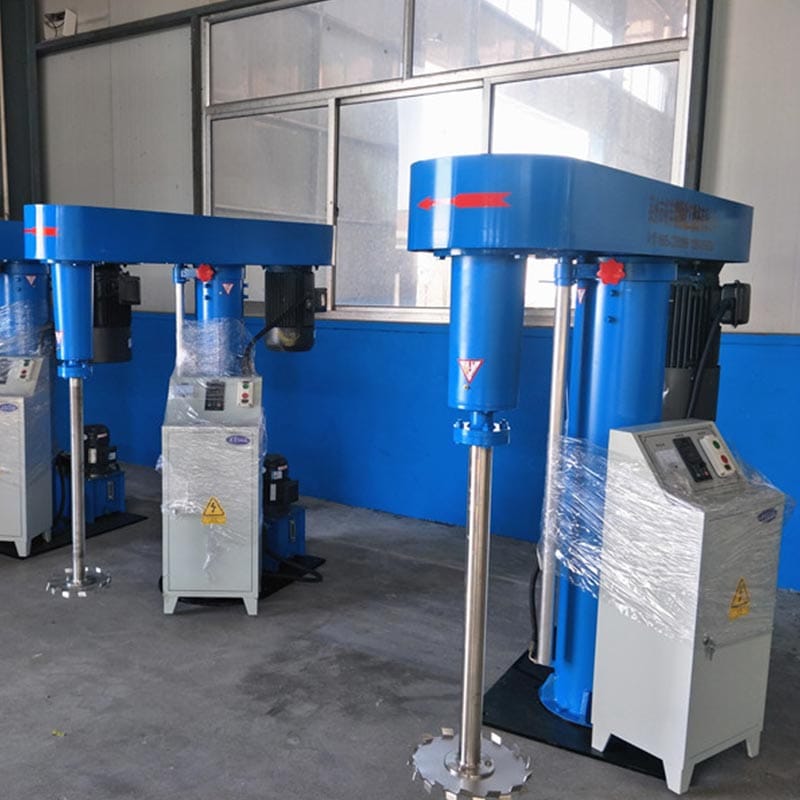
At its core, a high speed disperser consists of a high-torque motor, a dispersion shaft with specialized blades (often called “dispersion heads” or “saw-tooth discs”), and a mixing vessel. The blade design creates strong vortex patterns that circulate materials efficiently while the high-speed rotation provides the mechanical energy needed for proper dispersion. This equipment is essential for achieving consistent product quality in industries where uniform particle size distribution is critical.
Overview of Industrial Applications
High speed dispersion machines have become indispensable across multiple industrial sectors, each with unique requirements and challenges:
- Paint Industry: Essential for dispersing pigments into binders and solvents, ensuring consistent color strength and preventing settling
- Ink Manufacturing: Critical for achieving stable color dispersion and proper particle size reduction
- Coatings Production: Used for both solvent-based and water-based coatings where uniformity is paramount
- Chemical Industry: Applied in the production of adhesives, sealants, and specialty chemical formulations
- Cosmetic Sector: Vital for creating stable emulsions in creams, lotions, and other personal care products
- Pharmaceutical Processing: Used in the formulation of suspensions and emulsions where bioavailability depends on particle size
The versatility of these machines makes them valuable investments for manufacturers operating in multiple product segments, as the same equipment can often be adapted for different applications with minimal modifications.
Why Choosing the Right Machine Matters for Production Efficiency
Selecting the appropriate high speed dispersion machine directly impacts your bottom line in several critical ways. An undersized or poorly matched disperser will struggle to process materials efficiently, leading to longer processing times, increased energy consumption, and inconsistent product quality—all of which can damage your reputation and profitability.
Conversely, a properly selected high speed dispersion machine can reduce processing times by 30-50%, improve product consistency by up to 90%, and significantly lower operational costs through energy efficiency and reduced waste. The initial investment in quality equipment pays dividends through reduced downtime, lower maintenance requirements, and enhanced product quality that meets or exceeds customer expectations.
Fitur Utama yang Harus Diperhatikan dalam Mesin Dispersi Kecepatan Tinggi
Motor Power and Speed Capabilities
The motor serves as the heart of any high speed dispersion machine, and its specifications directly influence performance and versatility. Industrial-grade dispersers typically feature motors ranging from 2 HP for laboratory models to over 100 HP for large-scale production equipment.
When evaluating motor specifications, consider:
- Variable Speed Control: Essential for handling different materials and batch sizes
- Torque Output: More critical than horsepower for high-viscosity applications
- Speed Range: Standard ranges of 300-3000 RPM accommodate most applications
- Efisiensi Energi: Modern inverter-driven motors can reduce energy consumption by up to 40%
- Cooling Systems: Critical for continuous operation to prevent overheating
Manufacturers increasingly adopt direct-drive systems that eliminate belt-related maintenance while providing more precise speed control and higher overall efficiency.
Dispersing Shaft and Blade Design
The dispersion shaft and blade assembly determines the efficiency of particle breakdown and material circulation. Several designs are available, each optimized for specific applications:
- Saw-tooth Discs: Most common for general-purpose dispersion, creating excellent shear forces
- Cowles Blades: Ideal for moderate-viscosity materials requiring strong radial flow
- Propeller Blades: Suitable for low-viscosity applications where circulation is prioritized
- High-Shear Impellers: Designed for demanding applications requiring maximum energy input
Blade geometry, including the number and angle of teeth, significantly affects dispersion efficiency. The shaft must be robust enough to handle high torsional forces while maintaining precise alignment to prevent vibration and premature wear.
Tank Capacity and Material Compatibility
Tank capacity should align with your production requirements while allowing for growth. Common industrial sizes range from 50 liters to 5000 liters, with larger custom solutions available for specialized applications.
Material compatibility is equally critical:
- Stainless Steel: Industry standard for most applications, offering excellent corrosion resistance
- Hastelloy: Required for aggressive chemical environments
- Glass-lined Options: For processes requiring extreme chemical inertness
- Specialized Coatings: Applied to reduce adhesion and simplify cleaning
The tank design should incorporate baffles to prevent vortex formation and ensure uniform circulation throughout the vessel.
Control Systems and Automation Options
Modern high speed dispersion machines offer sophisticated control systems that enhance reproducibility and reduce operator dependency:
- Touch Screen Interfaces: Provide intuitive operation and recipe management
- PLC Integration: Enables seamless incorporation into automated production lines
- Temperature Monitoring: Essential for temperature-sensitive formulations
- Pressure Sensing: Required for closed-system operations
- Remote Monitoring: Allows real-time observation and adjustment from control rooms
Advanced systems can store multiple dispersion profiles, enabling quick changeovers between different products while maintaining consistent processing parameters.
Pengertian Jenis Mesin Dispersi Kecepatan Tinggi
Laboratory vs Industrial Machines
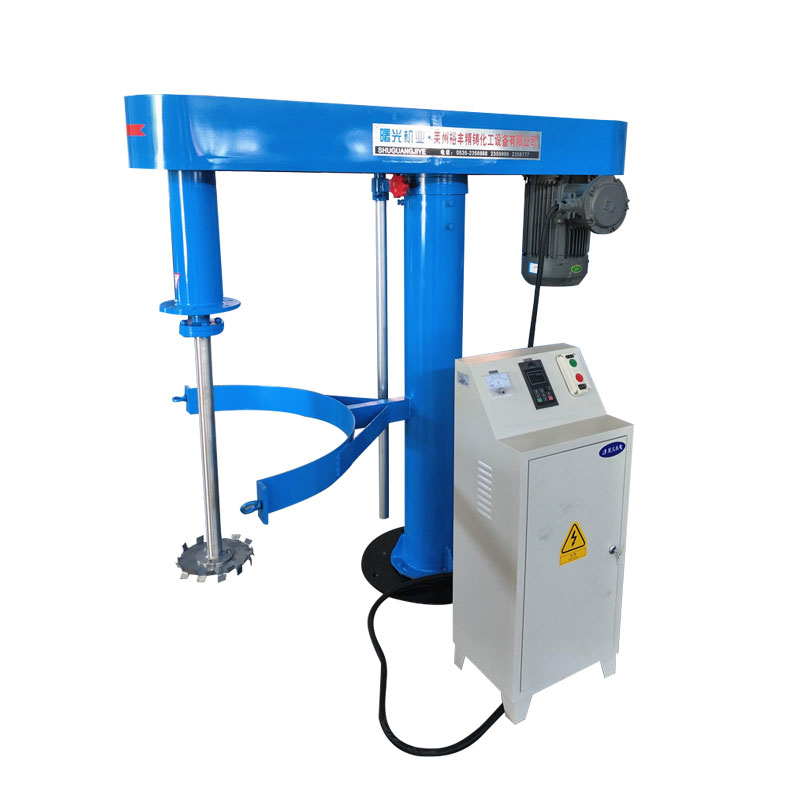
The distinction between laboratory and industrial high speed dispersion machines extends beyond capacity considerations. Laboratory models typically feature:
- Smaller tank capacities (1-50 liters)
- Lower power requirements (0.5-5 HP)
- Greater flexibility for testing multiple formulations
- Advanced sampling capabilities for process development
Industrial machines, conversely, prioritize:
- Production efficiency and throughput
- Robust construction for continuous operation
- Integration capabilities with existing production lines
- Advanced automation and control systems
Many manufacturers maintain both laboratory and production-scale equipment, using the former for formulation development and quality control, while the latter handles bulk manufacturing.
Single vs Multi-Functional Machines
Single-function high speed dispersion machines excel at dedicated dispersion operations, offering optimized performance for specific applications. These machines are ideal for high-volume production where the process remains constant.
Multi-functional machines incorporate additional processing capabilities, such as:
- Vacuum dispersion for air-sensitive formulations
- Heating and cooling capabilities for temperature-dependent processes
- Multiple dispersion heads for sequential processing steps
- Homogenization functions for additional particle size reduction
While multi-functional equipment represents a larger initial investment, it can reduce capital expenditure by consolidating multiple processing steps into a single unit.
Small-Scale vs Large-Scale Production Machines
Production scale requirements significantly influence equipment selection:
表格
| Machine Type | Rentang Kapasitas | Power Range | Typical Applications | Batch Frequency |
|---|---|---|---|---|
| Laboratory Scale | 1-50 L | 0.5-5 HP | R&D, Quality Control, Small Batches | Frequent Changeovers |
| Pilot Scale | 50-200 L | 5-15 HP | Process Development, Mid-Sized Production | Medium Frequency |
| Production Small | 200-1000 L | 15-50 HP | Specialty Products, Limited Production | Daily Batches |
| Production Large | 1000-5000+ L | 50-200 HP | High-Volume Commodity Production | Continuous Operation |
Scale-up considerations must include not only capacity but also heat dissipation, mixing uniformity, and processing time differences that occur at larger volumes.
Manfaat Menggunakan Mesin Dispersi Kecepatan Tinggi di Pabrik Anda
Improved Production Efficiency and Output
The primary advantage of high speed dispersion machines lies in their ability to dramatically reduce processing times while improving product quality. Traditional mixing methods might require 2-4 hours to achieve adequate dispersion, whereas modern high speed dispersers can accomplish the same results in 30-45 minutes.
This efficiency translates to:
- Increased daily production capacity without additional equipment
- Reduced labor costs through automated operation
- Lower energy consumption per unit of product produced
- Faster turnaround times enabling smaller batch sizes and reduced inventory
Manufacturers implementing high speed dispersion technology often report capacity increases of 40-80% without expanding their physical footprint.
Uniform Mixing and Consistent Product Quality
The intense shear forces generated by high speed dispersion machines ensure uniform particle size distribution and prevent re-agglomeration. This consistency is crucial for products where:
- Color strength must remain batch-to-batch consistent (paints, inks)
- Viscosity specifications must be tightly controlled (coatings, adhesives)
- Particle size affects product performance (cosmetics, pharmaceuticals)
- Product appearance and texture determine market acceptance
Quality control data typically shows 60-90% reduction in product variability when implementing proper high speed dispersion equipment, significantly reducing waste and rework expenses.
Reduced Energy Consumption and Operational Costs
Despite their high-power motors, modern high speed dispersion machines often demonstrate superior energy efficiency compared to conventional mixing equipment. This apparent paradox results from:
- Shorter processing times requiring less total energy input
- Optimized blade designs reducing power requirements per unit of output
- Efficient motor and drive systems minimizing transmission losses
- Reduced material waste and rework energy costs
Lifecycle cost analyses frequently show 20-40% lower total operational costs for high speed dispersion systems when compared to conventional mixing alternatives, with payback periods often under two years for high-volume applications.
Aplikasi Umum Mesin Dispersi Kecepatan Tinggi
Paint, Coatings, and Ink Production
The paint industry represents one of the largest user groups for high speed dispersion technology. Proper pigment dispersion is critical for:
- Color strength and development
- Gloss and finish consistency
- Opacity and hiding power
- Stability and shelf life
- Application properties
In coatings manufacturing, dispersion quality affects:
- Film formation and adhesion
- Protective properties
- Weather resistance
- Mechanical strength
The ink industry demands exceptional dispersion uniformity to ensure consistent color reproduction, print quality, and drying characteristics across different printing processes.
Cosmetic Formulations
Cosmetic applications require particular attention to dispersion quality, as particle size and distribution directly impact:
- Product texture and feel
- Ingredient stability and shelf life
- Delivery of active ingredients
- Consumer acceptance
- Regulatory compliance
High speed dispersion machines enable manufacturers to create stable emulsions and suspensions that maintain their properties throughout their intended shelf life while providing the sensory attributes that consumers demand.
Chemical Processing and Industrial Materials
The chemical industry utilizes high speed dispersion machines for:
- Catalyst preparation
- Specialty chemical production
- Adhesive and sealant manufacturing
- Polymer additive dispersion
- Ceramic slip preparation
In these applications, dispersion quality can significantly affect:
- Reaction rates and yields
- Product performance characteristics
- Physical properties of final materials
- Processing requirements for downstream operations
Faktor-Faktor yang Mempengaruhi Pemilihan Mesin
Production Volume and Batch Size
Production volume requirements should drive machine selection, but with consideration for future growth and flexibility needs. Key considerations include:
- Daily and weekly production targets
- Product mix and changeover requirements
- Seasonal demand variations
- Growth projections over the next 3-5 years
- Backup capacity for equipment downtime
Optimizing machine size for your volume requirements balances capital efficiency with operational flexibility, avoiding both under-utilization and production bottlenecks.
Viscosity of Materials to be Processed
Material viscosity represents one of the most critical factors in machine selection. Different products require dramatically different approaches:
- Low Viscosity (under 1000 cP) : Standard dispersers with appropriate blade designs
- Medium Viscosity (1000-5000 cP) : Enhanced power and specialized impeller designs
- High Viscosity (5000-50,000 cP) : Heavy-duty construction, high-torque motors, specialized blades
- Very High Viscosity (over 50,000 cP) : May require planetary mixers or alternative technologies
Viscosity also affects power requirements, processing times, and the need for jacketed vessels for temperature control.
Space and Installation Requirements
Physical installation constraints must be considered early in the selection process:
- Available floor space and ceiling height
- Access requirements for maintenance and cleaning
- Utility connections (power, compressed air, cooling water)
- Proximity to upstream and downstream processes
- Safety and regulatory requirements for installation
Portable or skid-mounted systems can offer flexibility when production layouts change or when multiple production locations share equipment.
Budget Considerations and Return on Investment
While initial equipment cost is an important consideration, total cost of ownership provides a more accurate picture of economic viability:
表格
| Cost Category | Traditional Mixers | Modern High Speed Dispersers |
|---|---|---|
| Initial Equipment Cost | Lower | Higher |
| Installation Costs | Moderate | Moderate |
| Operating Energy Costs | Higher | Lower |
| Maintenance Costs | Higher | Lower |
| Labor Costs | Higher | Lower |
| Waste and Rework | Higher | Lower |
| Production Throughput | Lower | Higher |
| Total Annual Cost | Higher | Lower |
ROI calculations should incorporate all relevant factors, including quality improvements, reduced waste, and production capacity increases, which often justify the investment in superior equipment.
Tips Pemeliharaan dan Umur Panjang
Regular Cleaning and Preventive Maintenance
Proper cleaning procedures prevent cross-contamination and maintain equipment performance:
- Implement standardized cleaning protocols for each product type
- Use appropriate cleaning agents that won’t damage seals or bearings
- Regular inspection and replacement of worn components
- Documentation of maintenance activities for regulatory compliance
- Training of operators on proper cleaning techniques
Preventive maintenance schedules should be established based on usage hours and application demands, typically including monthly inspections and quarterly thorough maintenance procedures.
Checking Motor and Shaft Wear
Regular assessment of motor and mechanical components ensures reliable operation:
- Monitor motor temperature and vibration during operation
- Check bearings for excessive wear or noise
- Inspect shaft alignment and coupling condition
- Examine blades for wear, damage, or corrosion
- Record performance data to identify developing issues
Early detection of wear patterns prevents catastrophic failures and extends equipment life significantly.
Lubrication and Replacement of Critical Components
Proper lubrication and timely component replacement are essential:
- Use manufacturer-recommended lubricants for bearings and moving parts
- Establish lubrication schedules based on usage patterns
- Replace seals, gaskets, and wear parts according to maintenance guidelines
- Keep spare parts inventory for critical components
- Document component replacement history
Neglecting these maintenance aspects can lead to premature equipment failure, increased downtime, and reduced product quality.
Safety Protocols for Operators
Safety must remain paramount in all operations:
- Implement comprehensive training programs for all operators
- Establish lockout/tagout procedures for maintenance activities
- Ensure proper guarding of rotating components
- Require appropriate personal protective equipment
- Conduct regular safety audits and refresher training
Modern high speed dispersion machines incorporate multiple safety features, but proper training and procedures are essential to prevent accidents and ensure safe operation.
How to Source the Best High Speed Dispersion Machine
Choosing Reliable Manufacturers
Selecting a reputable manufacturer ensures equipment quality and ongoing support:
- Research manufacturer experience and industry reputation
- Request customer references and case studies
- Verify manufacturing capabilities and quality control processes
- Assess technical support capabilities and availability
- Evaluate warranty terms and service level agreements
Experienced manufacturers provide valuable insights into application requirements and can recommend optimal configurations for specific production needs.
Comparing Features and Prices
While price is an important consideration, value assessment should consider:
- Performance capabilities relative to requirements
- Construction quality and component specifications
- Energy efficiency and operational costs
- Maintenance requirements and costs
- Included warranties and service packages
Detailed specifications and side-by-side comparisons enable informed decisions that balance short-term costs with long-term value.
Evaluating Warranties and After-Sales Support
Comprehensive support ensures long-term equipment reliability:
- Understand warranty coverage terms and exclusions
- Verify availability of technical support and spare parts
- Assess response times for service requests
- Evaluate training programs and documentation quality
- Consider upgrade and modification capabilities
Ongoing manufacturer support can significantly impact total ownership costs and production reliability over the equipment’s operational life.
Customizable Solutions for Factory Needs
Many applications benefit from customized equipment solutions:
- Tailored tank configurations for specific requirements
- Specialized materials of construction for unique applications
- Custom blade designs for challenging formulations
- Integration with existing production lines and control systems
- Multi-functional capabilities for complex processes
Manufacturing partners willing to develop customized solutions can provide equipment optimized for your specific production requirements rather than offering only standard products.
Kesimpulan
Choosing the right high speed dispersion machine represents a critical decision that significantly impacts your factory’s efficiency, product quality, and operational costs. The benefits of implementing proper dispersion technology—improved product quality, reduced waste, increased production capacity, and lower operational costs—far outweigh the initial investment when equipment is properly selected and maintained.
Manufacturers should carefully assess their production requirements, material characteristics, and growth projections when selecting equipment. Partnering with experienced manufacturers who understand your industry and application requirements ensures that you receive equipment optimized for your specific needs rather than generic solutions that may not deliver optimal performance.
Investment in high-quality high speed dispersion equipment pays dividends through:
- Consistent product quality that meets or exceeds customer expectations
- Reduced waste and rework through proper dispersion
- Increased production capacity and efficiency
- Lower operational costs and improved profitability
- Enhanced competitiveness in demanding markets
By following the guidelines outlined in this article and working with knowledgeable suppliers, manufacturers can select high speed dispersion machines that deliver reliable performance and support their long-term growth and success in competitive markets worldwide.
PERTANYAAN YANG SERING DIAJUKAN
What is the ideal speed range for a high speed dispersion machine?
The ideal speed range depends on the application and material characteristics. For most industrial applications, speeds between 1000-2000 RPM provide optimal results. Lower viscosities may benefit from higher speeds, while high-viscosity materials often require slower speeds with higher torque. Variable speed drives allow operators to optimize speed for each formulation and batch size, maximizing dispersion efficiency while minimizing energy consumption.
Can these machines handle both low and high-viscosity materials?
Modern high speed dispersion machines can be configured to handle a wide viscosity range, typically from water-like materials (under 100 cP) to paste-like formulations (up to 50,000 cP). However, optimal performance requires proper motor selection, blade design, and speed control. Very high-viscosity applications may need specialized equipment such as planetary mixers, but most industrial formulations fall within the capabilities of properly specified high speed dispersers.
How long does a typical machine last with proper maintenance?
With proper maintenance and regular servicing, a high-quality industrial high speed dispersion machine can last 15-20 years or more. Key factors affecting equipment life include:
- Quality of initial construction and components
- Intensity of usage and operating conditions
- Adherence to maintenance schedules
- Proper operation by trained personnel
- Environmental conditions such as dust, humidity, and temperature
Regular preventive maintenance and timely replacement of wear components significantly extend equipment life and maintain performance over time.
Are there energy-efficient high speed dispersion machines available?
Yes, modern high speed dispersion machines incorporate numerous energy-efficient features:
- Inverter-driven motors that adjust power consumption to processing requirements
- Optimized blade designs that maximize dispersion efficiency per unit of energy
- Advanced control systems that minimize processing times
- High-efficiency drive systems reducing transmission losses
- Variable speed operation allowing operation at optimal speeds rather than fixed high speeds
Energy-efficient models can reduce power consumption by 30-50% compared to conventional equipment while improving product quality and reducing processing times, providing rapid return on investment.