Daftar Isi
Pendahuluan
What is a Horizontal Sand Mill Machine?
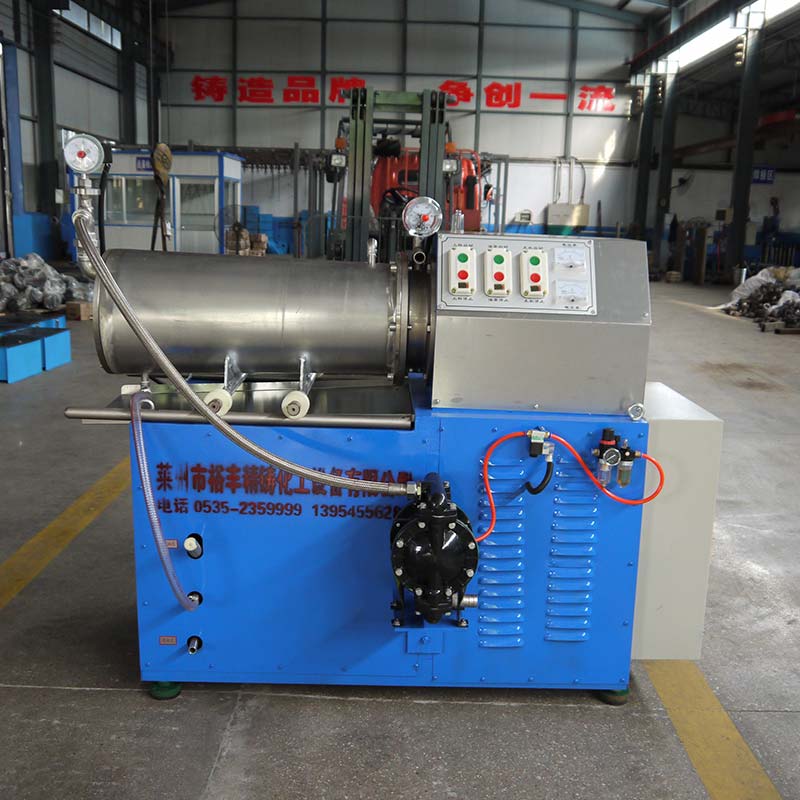
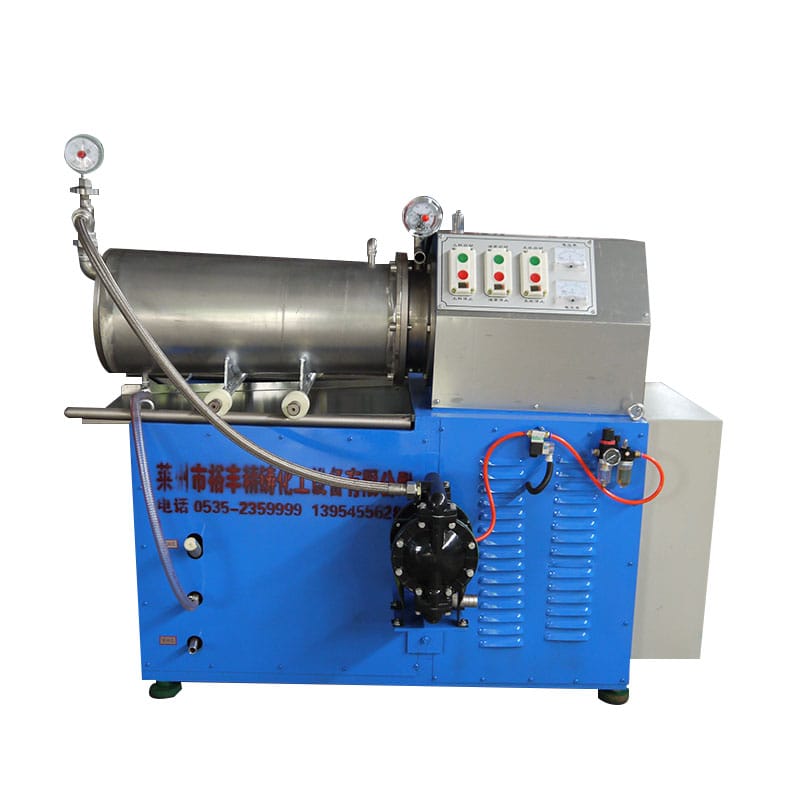
A horizontal sand mill machine is an advanced wet grinding and dispersing equipment designed for industrial applications requiring precise particle size reduction and uniform dispersion. As a leading manufacturer in this field, we understand that these machines represent a critical investment for paint, ink, and coating manufacturers seeking to achieve superior product quality and production efficiency.
The horizontal sand mill machine operates on a sophisticated principle: a high-speed rotating agitator within a horizontal grinding chamber generates intense shear forces through collision, friction, and shearing between grinding media and materials. This process effectively breaks down solid particles into sub-micron or even nanometer sizes, achieving uniform dispersion that traditional grinding methods simply cannot match.
From a manufacturing perspective, horizontal sand mills are engineered with precision components including tungsten carbide or ceramic grinding discs, advanced mechanical seals, and dynamic separation systems. These features ensure consistent performance, minimal contamination, and extended equipment lifespan. The horizontal configuration offers distinct advantages over vertical designs, particularly in terms of media distribution uniformity and energy efficiency.
Key Components of a Horizontal Sand Mill Machine
Understanding the fundamental components of a horizontal sand mill machine is essential for optimal operation and maintenance:
Grinding Shaft System: The heart of the machine, typically constructed from high-grade stainless steel or hardened alloys, drives the grinding media at speeds ranging from 700 to 1650 RPM depending on the model. The shaft supports either disc-type or pin-type dispersers that create the intense turbulence necessary for efficient grinding.
Grinding Media: Available in various materials including zirconia beads, glass beads, ceramic, and tungsten carbide. The selection depends on the application requirements – zirconia offers superior wear resistance for demanding applications, while glass beads provide cost-effective solutions for standard grinding needs. Media sizes typically range from 0.1mm to 2.5mm.
Transmission System: High-efficiency motors coupled with precision gearboxes ensure consistent power delivery. Variable frequency drives (VFDs) allow precise speed control, enabling operators to optimize grinding parameters for different materials and product specifications.
Cooling System: Dual jacket cooling arrangements maintain optimal operating temperatures between 20-50°C, preventing thermal degradation of heat-sensitive materials. Advanced models feature oil cooling systems for high-temperature applications.
Separation System: Dynamic gap separators efficiently separate grinding media from processed materials, with gap ranges adjustable from 0.05mm to 2.0mm depending on the media size being used.
Importance in Industrial Grinding
The horizontal sand mill machine has become indispensable in modern industrial grinding operations for several compelling reasons:
Enhanced Grinding Efficiency: Compared to traditional ball mills or three-roll mills, horizontal sand mills achieve 30-50% higher throughput while consuming less energy per unit of product. The energy density per unit volume is significantly higher, enabling faster particle size reduction.
Superior Product Uniformity: The horizontal configuration eliminates the gravitational media settling issues common in vertical mills, ensuring uniform particle size distribution throughout the grinding chamber. This translates to batch-to-batch consistency that manufacturers can rely on.
Cost Reduction: Higher throughput, reduced energy consumption, and longer equipment life all contribute to lower production costs. Many of our customers report 20-40% reductions in operational costs after switching from older grinding technologies.
Versatility: Modern horizontal sand mills handle a wide range of viscosities (from 500 to 50,000 cPs) and can process materials with initial particle sizes up to 450 microns, achieving final particle sizes below 1 micron.
Keuntungan Menggunakan Mesin Sand Mill Horizontal
High Grinding Efficiency and Consistency
Horizontal sand mill machines deliver exceptional grinding performance that sets them apart from other milling technologies. The horizontal configuration ensures uniform distribution of grinding media throughout the chamber, eliminating the dead zones and media settling issues that plague vertical designs. This uniform distribution translates directly to more consistent particle size reduction across every batch.
The energy efficiency of horizontal sand mills is particularly noteworthy. Through optimized chamber geometry and media movement patterns, these machines achieve superior grinding with lower energy input. Many of our customers report energy savings of 20-30% compared to their previous equipment, while simultaneously achieving better particle size distribution.
Process consistency is another critical advantage. Advanced control systems monitor temperature, pressure, and flow rates, automatically adjusting parameters to maintain optimal conditions. This automation reduces human error and ensures that every batch meets the same high standards, regardless of operator experience or shift changes.
Versatility Across Multiple Industries
The horizontal sand mill machine’s adaptability makes it valuable across numerous industries:
Paint Industry: From architectural coatings to industrial paints and automotive finishes, horizontal sand mills handle diverse formulations with ease. They process both water-based and solvent-based systems, achieve uniform pigment dispersion, and maintain color consistency across large production volumes.
Ink Manufacturing: Whether producing flexographic inks, gravure inks, screen printing inks, or specialty digital printing inks, horizontal sand mills deliver the fine particle size and uniform dispersion required for optimal print quality and color strength.
Coating Materials: Industrial coatings, protective coatings, and specialty formulations all benefit from the precise particle size control and uniform dispersion that horizontal sand mills provide. The equipment handles high-viscosity formulations that other mills simply cannot process.
Pigment Processing: For pigment manufacturers, horizontal sand mills enable efficient dispersion of difficult-to-grind pigments, achieving the fine particle sizes needed for optimal color development and stability.
Energy Saving and Reduced Maintenance Costs
One of the most compelling advantages of horizontal sand mill machines is their ability to reduce operational costs through energy efficiency and minimal maintenance requirements.
Energy Efficiency: The optimized chamber design and efficient media movement patterns reduce energy consumption by 20-30% compared to traditional milling equipment. Variable frequency drives allow operators to match motor speed to actual process requirements, avoiding energy waste during startup or when processing less demanding materials.
Reduced Maintenance: Advanced mechanical seals with double-end face designs and forced cooling extend seal life to 5,000+ hours of operation. Wear-resistant components such as tungsten carbide or ceramic grinding discs significantly reduce wear and replacement frequency. Many customers report maintenance intervals 2-3 times longer than with previous equipment.
Lower Labor Costs: Automated controls and self-cleaning features reduce the need for constant operator attention. Quick-change designs for grinding chambers and seals minimize downtime during routine maintenance, keeping production lines running efficiently.
Horizontal Sand Mill Machines in Paint Production
How Horizontal Sand Mills Improve Paint Quality
The paint industry has embraced horizontal sand mill technology because of its profound impact on final product quality. The superior particle size reduction and uniform dispersion capabilities of these machines directly translate to paints with enhanced performance characteristics.
Color Uniformity and Strength: Horizontal sand mills achieve exceptional pigment dispersion, breaking down pigment agglomerates to their primary particle size. This results in paints with more vibrant, consistent color and improved hiding power. Many manufacturers report color strength improvements of 15-25% after switching from older grinding technologies.
Gloss and Surface Finish: The uniform particle size distribution achieved by horizontal sand mills creates smoother paint films with enhanced gloss characteristics. This is particularly important for automotive coatings and high-end architectural finishes where surface appearance is critical.
Stability and Shelf Life: Properly dispersed pigments remain suspended longer, reducing settling and separation issues during storage. This extends product shelf life and reduces customer complaints about poor mixing or inconsistent performance.
Consistency Across Batches: The automated controls and uniform grinding action ensure that every batch meets the same high standards. This consistency is invaluable for manufacturers producing multiple batches of the same product or operating multiple production lines.
Common Paint Formulations Processed
Horizontal sand mills demonstrate remarkable versatility across various paint formulations:
Water-Based Paints: These environmentally friendly formulations present unique challenges due to their different rheological properties. Horizontal sand mills handle both low and high solids content water-based systems effectively, achieving the fine particle sizes needed for optimal performance. The equipment’s efficient cooling systems are particularly valuable for water-based paints, which can be sensitive to temperature increases during grinding.
Solvent-Based Paints: Traditional solvent-based formulations benefit from horizontal sand mills’ ability to achieve fine pigment dispersion without excessive solvent evaporation. The closed system design minimizes solvent loss and reduces VOC emissions, helping manufacturers meet environmental regulations.
Industrial Coatings: High-performance industrial coatings often contain high loadings of pigments and fillers, creating challenging grinding conditions. Horizontal sand mills process these difficult formulations efficiently, achieving the particle size distribution and dispersion quality required for industrial coating performance.
Specialty Coatings: UV-curable coatings, powder coatings, and other specialty formulations all benefit from the precise control and uniform dispersion that horizontal sand mills provide. The equipment’s ability to handle high-viscosity materials makes it ideal for these demanding applications.
Case Study Example
A leading automotive coating manufacturer recently upgraded their production line from traditional three-roll mills to our horizontal sand mill technology. The results were impressive:
- Production capacity increased by 40% due to higher throughput rates
- Energy consumption decreased by 25% despite the higher output
- Particle size distribution improved from D90 = 2.5μm to D90 = 1.2μm
- Color strength increased by 20%, allowing reduced pigment usage
- Maintenance downtime decreased by 60% due to longer component life
The manufacturer achieved ROI within 18 months through a combination of increased production capacity, reduced energy and maintenance costs, and quality improvements that reduced rework and customer complaints.
Horizontal Sand Mill Machines in Ink Grinding
Role in Ink Particle Size Reduction
The ink industry demands exceptionally fine particle sizes and extremely uniform dispersion to achieve optimal print quality and performance. Horizontal sand mill machines have become the equipment of choice for ink manufacturers because they consistently meet these demanding requirements.
Sub-Micron Capabilities: Modern horizontal sand mills routinely achieve particle sizes below 1 micron, with some specialized models reaching the nanometer range. This level of fineness is essential for high-resolution printing applications where large particles can cause defects in printed images.
Narrow Particle Size Distribution: Beyond achieving fine particle sizes, horizontal sand mills produce narrow particle size distributions that are critical for consistent ink performance. The uniform grinding action ensures that all particles fall within a tight size range, preventing issues that can arise from a mix of fine and coarse particles.
High-Speed Processing: Ink production often involves high-volume requirements. Horizontal sand mills operate at high throughput rates while maintaining the precise particle size control that ink formulations demand. This combination of speed and precision makes them ideal for large-scale ink manufacturing.
Temperature Control: Many ink components are sensitive to heat. Horizontal sand mills’ efficient cooling systems maintain optimal processing temperatures, preventing thermal degradation of sensitive resins, polymers, and other ink components.
Ensuring Consistency and Color Strength
Ink manufacturers face intense competition and must deliver products that meet exacting specifications for color strength, printability, and consistency. Horizontal sand mills provide several advantages that help manufacturers achieve these goals:
Color Development: The fine pigment dispersion achieved by horizontal sand mills maximizes color development, allowing manufacturers to produce inks with superior color strength. This can enable reduced pigment usage while maintaining color performance, creating significant cost savings.
Batch-to-Batch Consistency: Automated controls and uniform grinding action ensure that every batch meets the same high standards. This consistency is critical for ink manufacturers producing multiple batches of the same color or operating multiple production lines.
Rheology Control: Proper particle size and dispersion directly influence ink rheology. Horizontal sand mills enable precise control over these properties, ensuring that inks perform consistently across different printing presses and application conditions.
Reduced Settling: Well-dispersed pigments remain suspended longer during storage and transport, reducing settling issues that can affect ink performance and customer satisfaction.
Suitable Ink Types for Horizontal Sand Mills
Horizontal sand mills demonstrate exceptional versatility across various ink types:
Flexographic Inks: These fast-drying inks used for packaging printing require fine particle sizes for optimal print quality. Horizontal sand mills efficiently process both solvent-based and water-based flexographic inks, achieving the dispersion quality needed for high-resolution printing.
Gravure Inks: Gravure printing places exceptional demands on ink fineness and uniformity. Horizontal sand mills deliver the sub-micron particle sizes and narrow particle size distributions that gravure inks require, enabling high-quality reproduction of fine details and consistent color across large print runs.
Offset Inks: Both web offset and sheet-fed offset inks benefit from the precise control and uniform dispersion that horizontal sand mills provide. The equipment’s ability to handle high-viscosity formulations makes it particularly suitable for sheet-fed offset inks.
Screen Printing Inks: These thick, viscous inks present grinding challenges that horizontal sand mills handle effectively. The equipment’s ability to process high-viscosity materials while achieving fine particle size makes it ideal for screen printing applications.
Specialty Inks: UV-curable inks, metallic inks, and other specialty formulations all benefit from the precise control and uniform dispersion that horizontal sand mills provide. The equipment’s versatility makes it valuable for manufacturers producing diverse ink portfolios.
Horizontal Sand Mill Machines in Coatings Industry
Application in Automotive and Industrial Coatings
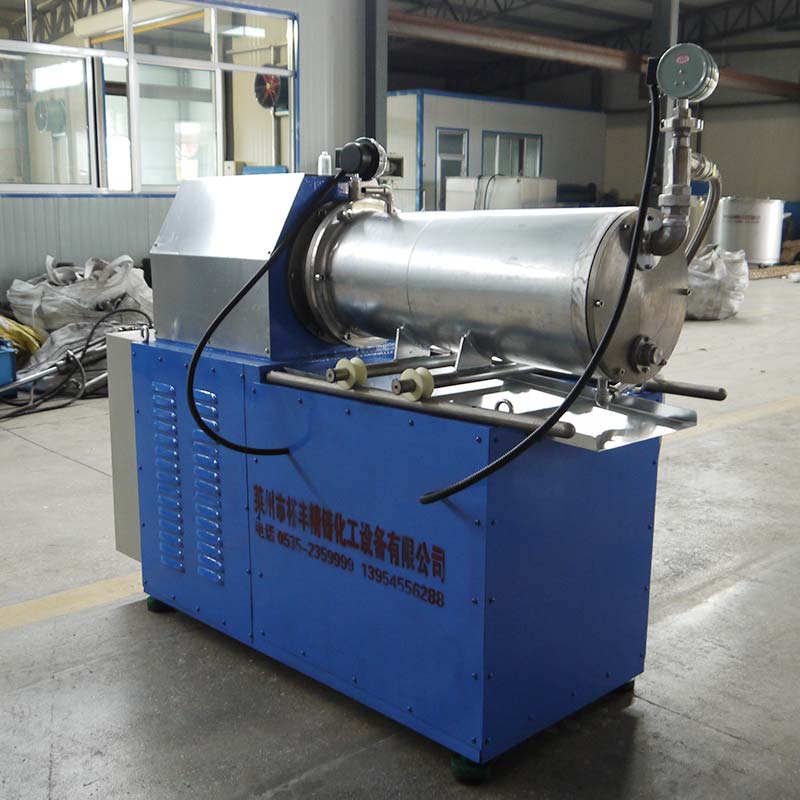
The automotive and industrial coatings sectors represent some of the most demanding applications for horizontal sand mill technology. These coatings must meet exacting specifications for appearance, durability, and performance, while often being produced in high volumes.
Automotive Coatings: Automotive manufacturers require coatings that provide exceptional appearance, durability, and consistency. Horizontal sand mills achieve the fine particle sizes and uniform dispersion needed for high-gloss finishes that meet automotive industry standards. The equipment’s ability to handle complex formulations with multiple pigments and effect pigments makes it ideal for automotive coating production.
Industrial Maintenance Coatings: These protective coatings must provide long-term durability in harsh environments. Horizontal sand mills enable proper dispersion of corrosion inhibitors, pigments, and other functional additives, ensuring that coatings perform as intended in demanding service conditions.
Specialty Coatings: Whether producing heat-resistant coatings, chemical-resistant coatings, or other specialized formulations, horizontal sand mills provide the precise control needed to achieve desired performance characteristics.
High-Volume Production: Automotive and industrial coating manufacturers often operate large-scale production facilities. Horizontal sand mills support high-volume production while maintaining the quality control and consistency that these demanding markets require.
Improving Surface Finish and Durability
The quality of final coating performance depends heavily on proper particle size reduction and dispersion during manufacturing. Horizontal sand mills contribute significantly to improved surface finish and coating durability:
Smoother Films: Uniform particle size distribution creates smoother coating films with better flow and leveling characteristics. This results in improved surface appearance and reduced surface defects.
Enhanced Gloss: Fine, uniformly dispersed pigments create coatings with higher gloss and more consistent appearance across different batches and application conditions.
Better Adhesion: Proper dispersion of resins, additives, and other components ensures optimal film formation and adhesion to substrates, contributing to coating durability.
Improved Barrier Properties: Uniform dispersion of pigments and functional additives creates coatings with more consistent barrier properties against moisture, chemicals, and other environmental factors.
Reduced Defects: Proper grinding and dispersion reduce defects such as pigment agglomerates, poor color development, and inconsistent film formation that can compromise coating performance.
Reducing Production Waste
Horizontal sand mills help coating manufacturers reduce waste and improve overall process efficiency:
Higher First-Pass Yield: Superior grinding consistency reduces batch failures and rework requirements. Many manufacturers report first-pass yield improvements of 5-10% after implementing horizontal sand mill technology.
Reduced Material Waste: Precise process control minimizes over-grinding and material losses during cleaning and changeovers. Efficient cleaning between color or formulation changes reduces solvent and material waste.
Energy Efficiency: Lower energy consumption per unit of product reduces both operating costs and environmental impact. The 20-30% energy savings typical of horizontal sand mills represent significant cost reductions for energy-intensive coating production.
Extended Equipment Life: Longer component life and reduced maintenance requirements mean less downtime and lower replacement costs. The reduced maintenance needs also decrease the environmental impact of equipment manufacturing and disposal.
How to Choose the Right Horizontal Sand Mill Machine
Factors to Consider
Selecting the appropriate horizontal sand mill machine requires careful consideration of multiple factors to ensure optimal performance and return on investment:
Production Capacity Requirements: Determine your daily or hourly production needs and select equipment with appropriate throughput capacity. Horizontal sand mills are available in sizes ranging from laboratory-scale (0.3-5L) to large production units (200L+). Consider both current needs and potential future expansion when selecting capacity.
Grinding Media Selection: Choose media material based on your application requirements and cost considerations. Zirconia beads offer superior wear resistance for demanding applications but come at higher cost. Glass beads provide economical solutions for standard grinding needs. Media size selection depends on desired final particle size – smaller media generally produce finer particles but may require longer processing times.
Power Requirements: Ensure adequate motor power for your specific application. Higher power enables faster grinding and processing of more difficult materials, but also increases energy consumption. Variable frequency drives allow flexible power adjustment to match process requirements.
Cooling System Capacity: Evaluate cooling requirements based on your materials’ thermal sensitivity and processing volume. Dual jacket cooling is standard for most applications, while oil cooling may be needed for high-temperature operations.
Kompatibilitas Material: Verify that all wetted components are compatible with your materials, including seals, gaskets, and chamber materials. Stainless steel construction is standard, but specialized materials may be required for corrosive applications.
Small vs Large Horizontal Sand Mills
The choice between small and large horizontal sand mills depends on several factors:
Small Horizontal Sand Mills (0.3-30L):
- Ideal for laboratory R&D and pilot-scale production
- Lower initial investment
- Easier to clean and change between different formulations
- Suitable for small batch production and specialty products
- Limited throughput capacity
Large Horizontal Sand Mills (50-200L+):
- Designed for high-volume production
- Higher throughput rates and lower per-unit processing costs
- More automated controls and monitoring capabilities
- Better suited for continuous production operations
- Higher initial investment and more complex maintenance requirements
Many manufacturers find that a combination of small mills for R&D and product development, along with larger mills for production, provides the most flexible and cost-effective solution.
Customization Options from Manufacturers
As a manufacturer, we offer extensive customization options to ensure that your horizontal sand mill meets your specific requirements:
Chamber Material Options: Choose from stainless steel (304 or 316), tungsten carbide, ceramic, or polyurethane based on your application requirements and wear considerations.
Grinding Disc Configurations: Select from disc-type, pin-type, or turbine designs based on your materials and desired grinding characteristics. Each configuration offers different advantages for specific applications.
Sealing Systems: Choose from single mechanical seal, double mechanical seal, or specialized sealing arrangements based on your material compatibility and leak prevention requirements.
Control Systems: Options range from basic manual controls to fully automated systems with PLC integration, touch-screen interfaces, and remote monitoring capabilities.
Special Features: Additional options include explosion-proof designs for hazardous locations, inert gas purging systems for oxygen-sensitive materials, and specialized feeding systems for difficult materials.
Maintenance and Operational Tips
Routine Maintenance Schedule
Implementing a proper maintenance program is essential for maximizing horizontal sand mill performance and lifespan:
Daily Maintenance:
- Check cooling water flow and temperature
- Monitor motor current and temperature
- Inspect for unusual noises or vibrations
- Verify proper material flow and discharge
- Check seal condition for any leakage
Weekly Maintenance:
- Inspect and clean separation screens
- Check lubrication levels in gearboxes and bearings
- Inspect drive belts for proper tension
- Verify proper function of all safety interlocks
Monthly Maintenance:
- Check and replace worn seals if necessary
- Inspect grinding discs for excessive wear
- Verify calibration of temperature and pressure gauges
- Clean cooling system passages if necessary
Quarterly Maintenance:
- Complete inspection of all mechanical components
- Test and calibrate control systems
- Replace lubrication fluids in gearboxes and bearings
- Inspect electrical connections and components
Annual Maintenance:
- Complete teardown inspection of major components
- Replace wear parts regardless of apparent condition
- Recalibrate all instruments and control systems
- Update maintenance records and plan for upcoming needs
Memecahkan Masalah Umum
Understanding common problems and their solutions helps minimize downtime:
Uneven Particle Size Distribution:
- Check grinding media condition and replace worn media
- Verify proper media fill level (typically 75-85% of chamber volume)
- Inspect separation screen for clogging or damage
- Ensure proper material flow rates and residence time
Excessive Energy Consumption:
- Verify media size is appropriate for application
- Check for worn grinding discs affecting efficiency
- Inspect for excessive friction in bearings or seals
- Review operating parameters for optimization opportunities
Media Breakage:
- Check for excessive impact during startup
- Verify proper media size for application
- Inspect for foreign objects in material feed
- Review chamber geometry for media trapping areas
Seal Leakage:
- Check seal condition and replace if worn
- Verify proper seal lubrication
- Inspect for mechanical damage to seal faces
- Review material compatibility with seal materials
Temperature Issues:
- Verify cooling system operation
- Check for restricted cooling passages
- Review material flow rates and residence times
- Inspect insulation condition
Extending Lifespan of Your Industrial Sand Mill
Maximizing equipment lifespan requires attention to several key areas:
Proper Installation: Ensure foundation is level and vibration-isolated. Verify proper alignment of all drive components. Check electrical supply meets specifications.
Operator Training: Provide comprehensive training on proper operation and maintenance procedures. Emphasize the importance of following established procedures and reporting issues promptly.
Preventive Maintenance: Implement a scheduled maintenance program based on manufacturer recommendations. Keep detailed records of maintenance activities and component replacements.
Spare Parts Management: Maintain inventory of critical wear parts to minimize downtime during replacements. Establish relationships with reliable parts suppliers.
Performance Monitoring: Regularly track key performance indicators including energy consumption, throughput, product quality, and maintenance requirements. Analyze trends to identify potential issues before they cause failures.
Continuous Improvement: Regularly review maintenance records and failure patterns to identify opportunities for improvement. Update maintenance procedures based on lessons learned.
Enhancing Productivity and Efficiency
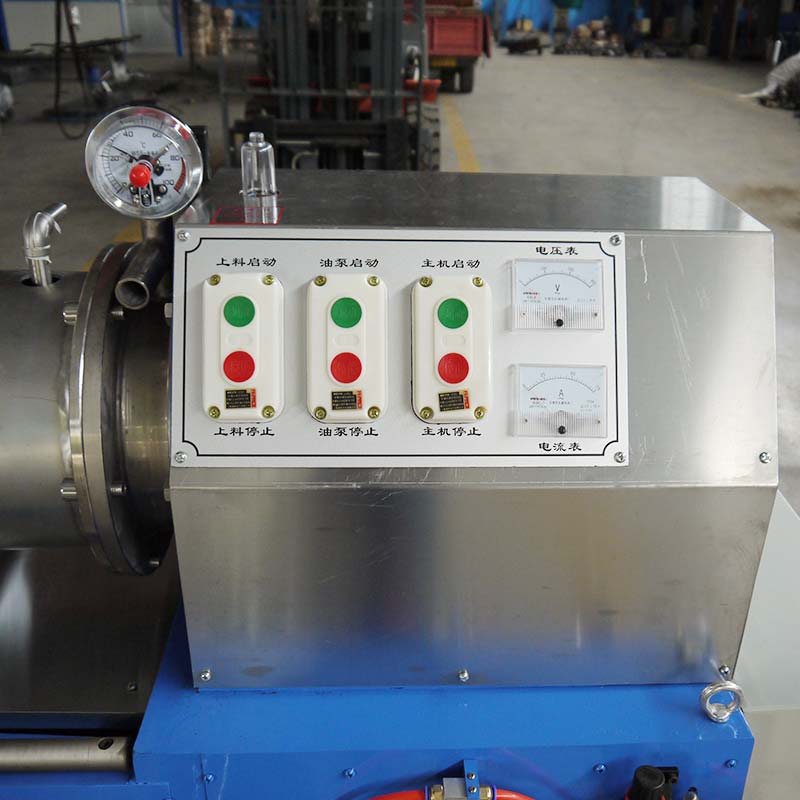
Optimizing Grinding Parameters
Achieving optimal horizontal sand mill performance requires careful attention to several key parameters:
Media Size Selection: Choose media size based on desired final particle size and material characteristics. Larger media (1.0-1.5mm) provide faster initial size reduction, while smaller media (0.2-0.5mm) achieve finer final particle sizes. Many processes benefit from staged grinding using different media sizes.
Media Fill Level: Optimal media fill rate typically ranges from 75-85% of chamber volume. Lower fill levels reduce efficiency through insufficient media contact, while higher levels can cause media sliding and reduced energy transfer.
Agitator Speed: Higher speeds generally provide faster grinding but increase energy consumption and media wear. Optimal speed depends on media size, material viscosity, and desired particle size. Variable frequency drives allow speed optimization for different applications.
Material Flow Rate: Residence time in the grinding chamber affects final particle size. Slower flow rates provide longer grinding time and finer particles but reduce throughput. Optimal flow rate balances grinding quality with production requirements.
Temperature Control: Monitor and control temperature carefully, as excessive heat can degrade sensitive materials. Cooling capacity must match the heat generated during grinding, particularly for high-viscosity materials or high-speed operation.
Integrating Horizontal Sand Mills into Production Lines
Effective integration of horizontal sand mills into production lines requires careful planning:
Process Flow Design: Position sand mills appropriately in relation to pre-dispersion equipment, storage tanks, and filling lines. Consider material handling requirements between process steps.
Material Handling Equipment: Select pumps, piping, and valves appropriate for your materials’ viscosity and flow characteristics. Ensure compatibility with cleaning and changeover procedures.
Control System Integration: Integrate sand mill controls with plant-wide control systems for consistent operation and data collection. Implement batch tracking and quality control systems as needed.
Automation Opportunities: Automate material feeding, temperature control, and other parameters to reduce operator requirements and improve consistency. Consider robotic systems for cleaning and maintenance tasks.
Utilities and Infrastructure: Ensure adequate electrical power, cooling water capacity, compressed air, and other utilities. Plan for future expansion and modifications.
Safety Considerations: Implement appropriate safety interlocks, emergency stop systems, and containment systems. Provide proper ventilation and explosion protection as needed.
Cost-Benefit Analysis for Manufacturers
Justifying investment in horizontal sand mill technology requires comprehensive cost-benefit analysis:
Capital Costs:
- Equipment purchase price
- Installation and commissioning costs
- Training costs
- Initial spare parts inventory
- Utility connections and infrastructure modifications
Operating Costs:
- Energy consumption
- Grinding media consumption
- Maintenance and repair costs
- Operator labor costs
- Consumables (seals, lubricants, etc.)
Benefits:
- Increased production capacity
- Improved product quality and consistency
- Reduced operating costs (energy, maintenance, materials)
- Lower waste and rework costs
- Enhanced competitive position
ROI Calculation: Most manufacturers achieve ROI within 18-36 months through a combination of increased production, reduced costs, and quality improvements. Payback period varies based on production volume, product value, and specific application requirements.
Long-Term Value: Beyond direct ROI, consider strategic benefits including improved market position, enhanced customer satisfaction, and greater operational flexibility.
| Horizontal Sand Mill Selection Guide | |
|---|---|
| Aplikasi | Recommended Configuration |
| Automotive Coatings | 50-200L chamber, zirconia media 0.3-0.8mm, pin-type disperser, dual cooling |
| Water-Based Paints | 30-100L chamber, glass or zirconia media 0.5-1.0mm, disc-type disperser |
| UV Inks | 15-50L chamber, zirconia media 0.2-0.5mm, turbine disperser, UV-compatible seals |
| Industrial Coatings | 50-150L chamber, zirconia or ceramic media 0.3-0.8mm, pin-type disperser |
| Pigment Dispersion | 20-100L chamber, zirconia media 0.5-1.5mm, disc or pin-type disperser |
Kesimpulan
Horizontal sand mill machines have become essential equipment in the paint, ink, and coatings industries, enabling manufacturers to achieve superior product quality while improving production efficiency and reducing operational costs. The advantages of horizontal sand mills – including high grinding efficiency, versatility across multiple applications, energy savings, and reduced maintenance requirements – make them valuable investments for manufacturers seeking competitive advantage in today’s demanding markets.
As a manufacturer with extensive experience in horizontal sand mill technology, we understand the unique challenges and requirements of paint, ink, and coating production. Our equipment is designed and built to deliver exceptional performance, reliability, and value, backed by comprehensive technical support and service capabilities.
Whether you’re looking to upgrade existing grinding equipment, expand production capacity, or improve product quality, horizontal sand mill technology offers proven solutions. Our team of experts can help you evaluate your specific requirements, select the appropriate equipment configuration, and implement solutions that deliver measurable results.
Contact us today to learn how horizontal sand mill technology can improve your production capabilities and contribute to your business success. We offer comprehensive application support, equipment demonstrations, and detailed cost-benefit analysis to help you make informed decisions about your grinding equipment investments.
The future of paint, ink, and coating production belongs to manufacturers who invest in advanced technology that delivers superior quality, efficiency, and value. Horizontal sand mill machines represent exactly that kind of technology – proven, reliable, and continuously evolving to meet the changing needs of modern manufacturing.
PERTANYAAN YANG SERING DIAJUKAN
How long does a horizontal sand mill machine last?
With proper maintenance, a high-quality horizontal sand mill can provide 8-12 years of reliable service. The lifespan depends heavily on maintenance quality, operating conditions, and the specific materials being processed. Key components like grinding discs and seals typically need replacement every 18-36 months, while major components like the grinding chamber and drive system can last the life of the machine.
Can it handle both paint and ink production?
Yes, horizontal sand mills are highly versatile and can handle both paint and ink production effectively. The same machine can often process different formulations with minor adjustments to parameters like media size, agitator speed, and flow rate. Many manufacturers use horizontal sand mills for multiple product lines, switching between paints, inks, and coatings as needed. Proper cleaning procedures between product changes are essential to prevent cross-contamination.
What makes it better than a vertical sand mill?
Horizontal sand mills offer several advantages over vertical designs:
- More uniform media distribution throughout the chamber
- Better particle size uniformity due to elimination of gravitational settling
- Higher energy efficiency due to optimized media movement
- Better handling of high-viscosity materials
- Reduced media wear and breakage
- More consistent batch-to-batch performance
While vertical mills may have lower initial costs, horizontal mills typically provide lower total cost of ownership through better efficiency, lower maintenance, and superior product quality.
How to improve grinding efficiency?
Several strategies can improve horizontal sand mill efficiency:
- Optimize media size selection for your application
- Maintain proper media fill level (75-85% of chamber volume)
- Adjust agitator speed based on material characteristics
- Implement pre-dispersion to reduce initial particle size
- Maintain proper temperature control to prevent material degradation
- Regular maintenance to keep components in optimal condition
- Use appropriate disperser design for your materials
- Optimize material flow rate and residence time