Table of Contents
As a leading manufacturer of colloid mill grinders, we understand the importance of delivering high-quality, efficient, and durable grinding equipment. Whether you are in the food, pharmaceutical, cosmetic, or chemical industry, a reliable colloid mill grinder can dramatically improve your production efficiency and product quality. In this comprehensive guide, we will cover everything from working principles to applications, maintenance, and buying tips, ensuring you make an informed decision when selecting the right machine for your needs.
What is a Colloid Mill Grinder?

A colloid mill grinder is a high-speed grinding machine designed to reduce the particle size of solids suspended in liquids, producing smooth emulsions, pastes, and fine suspensions. Unlike traditional grinders, colloid mill grinders use high shear force generated by a rotor and stator to achieve ultra-fine grinding and uniform particle distribution.
Key components include:
- Rotor and Stator: Generate shear and grinding action.
- Feeding Hopper: Allows continuous material input.
- Adjustable Gap: Controls particle size and fineness.
- Motor and Drive System: Ensures high-speed operation and consistency.
Compared to other grinding machines, colloid mill grinders are ideal for producing highly viscous materials and achieving uniform texture, which is crucial in industries like cosmetics and food processing.
How a Colloid Mill Grinder Works
The operation of a colloid mill grinder is simple yet highly effective. Material enters the feeding hopper, where it is immediately subjected to high-speed rotor action against a stationary stator. This shear force breaks down particles and mixes ingredients evenly, resulting in a smooth, homogeneous product.
Factors affecting grinding efficiency include:
- Rotor speed: Higher speed increases shear and fineness.
- Gap adjustment: Smaller gaps produce finer particles.
- Material properties: Viscosity, hardness, and moisture content impact performance.
The versatility of colloid mill grinders makes them suitable for food pastes, pharmaceutical creams, cosmetic gels, and chemical slurries, providing consistent results every time.
Applications of Colloid Mill Grinders
Colloid mill grinders are widely used across multiple industries for their efficiency and precision:
- Food Processing Industry: Ideal for sauces, peanut butter, chocolate, and salad dressings.
- Pharmaceutical Industry: Produces creams, ointments, and suspensions with uniform texture.
- Cosmetic Industry: Suitable for lotions, gels, and emulsions.
- Chemical Industry: Reduces particle size in slurries, paints, and adhesives.
| Industry | Typical Applications | Key Benefits |
|---|---|---|
| Food | Sauces, pastes, chocolate, dressings | Smooth texture, uniform mixing, consistent quality |
| Pharmaceutical | Creams, ointments, suspensions | Fine particle size, stable emulsions, high efficiency |
| Cosmetic | Lotions, gels, emulsions | High homogeneity, safe for sensitive ingredients |
| Chemical | Slurries, paints, adhesives | Uniform dispersion, precise particle control, scalable production |
How to Choose the Right Colloid Mill Grinder
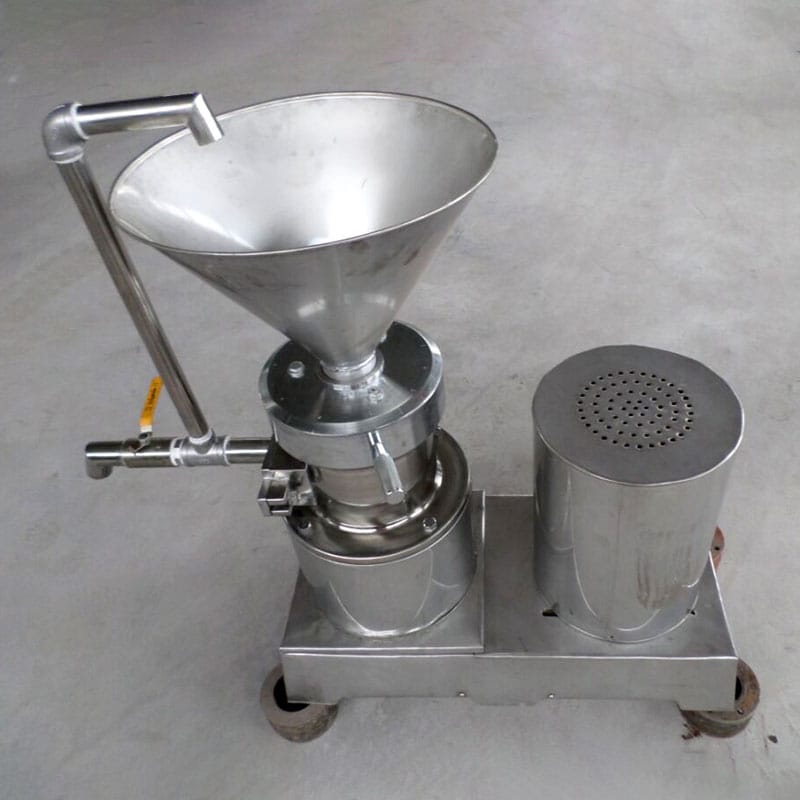
Selecting the best colloid mill grinder depends on your specific production needs. Consider the following:
- Industrial vs Laboratory Use: Laboratory models are smaller, suitable for testing or pilot production, while industrial units handle large-scale continuous production.
- Electric vs Manual Operation: Electric grinders provide consistent high-speed operation, essential for large batches.
- Specifications: Capacity, motor power, rotor speed, and gap adjustment range are critical for performance.
- Production Scale: Small-scale vs large-scale production requires different capacities and efficiency levels.
Choosing the right machine ensures efficient production, reduced downtime, and consistent product quality.
Maintenance and Troubleshooting Tips
Proper maintenance is essential to extend the lifespan of your colloid mill grinder and maintain performance:
- Routine Cleaning: Disassemble rotor and stator for thorough cleaning after each batch.
- Lubrication: Ensure moving parts are regularly lubricated to prevent wear.
- Common Issues: Inconsistent grinding may indicate rotor wear or incorrect gap settings.
- Safety Guidelines: Always follow manufacturer instructions to prevent accidents.
Regular maintenance ensures long-term reliability and reduces operational costs.
Advantages of Using a Colloid Mill Grinder
Using a colloid mill grinder offers numerous benefits across industries:
- High Efficiency: Produces fine, uniform particles quickly.
- Versatility: Handles a wide range of materials, from viscous pastes to low-viscosity liquids.
- Durable Construction: Made from high-quality stainless steel for corrosion resistance and long service life.
- Easy Integration: Can be installed into existing production lines for continuous operation.
Colloid Mill Grinder vs Other Grinding Equipment
Many manufacturers consider other grinding equipment, but colloid mill grinders often outperform alternatives:
- Vs Homogenizers: Colloid mills provide finer particle size for high-viscosity materials.
- Vs Ball Mills: Ball mills are slower and less suitable for emulsions or pastes.
- Vs Jet Mills: Jet mills are expensive and less practical for viscous materials.
This is why manufacturers like us prioritize colloid mill grinders for consistent high-quality production.
Buying Guide: Where to Get a Reliable Colloid Mill Grinder

As a manufacturer of high-quality colloid mill grinders, we recommend considering these factors when purchasing:
- Trusted Manufacturer: Choose a supplier with proven experience and technical support.
- Product Specifications: Check motor power, rotor speed, capacity, and gap adjustment range.
- Certifications and Compliance: Ensure sanitary standards for food, cosmetic, or pharmaceutical production.
- Shipping, Installation, and After-Sales Support: Professional installation and prompt support reduce downtime.
Conclusion
Choosing the right colloid mill grinder is critical for achieving high-quality, uniform, and efficient production in any industry. As a trusted manufacturer, we focus on producing reliable, durable, and versatile machines suitable for food, pharmaceutical, cosmetic, and chemical applications. By understanding the working principle, maintenance requirements, and applications of colloid mill grinders, businesses can optimize their production lines and ensure consistent results.
FAQ
Q: How often should a colloid mill grinder be cleaned?
A: Daily for high-viscosity or sticky materials; weekly for less viscous substances.
Q: Can it handle both wet and dry materials?
A: Colloid mill grinders are optimized for wet materials but can process semi-dry pastes.
Q: What is the average lifespan of an industrial colloid mill grinder?
A: With proper maintenance, 10–15 years is achievable.
Q: Is it suitable for small-scale production at labs or pilot plants?
A: Yes, laboratory-sized models are specifically designed for small batches and testing.