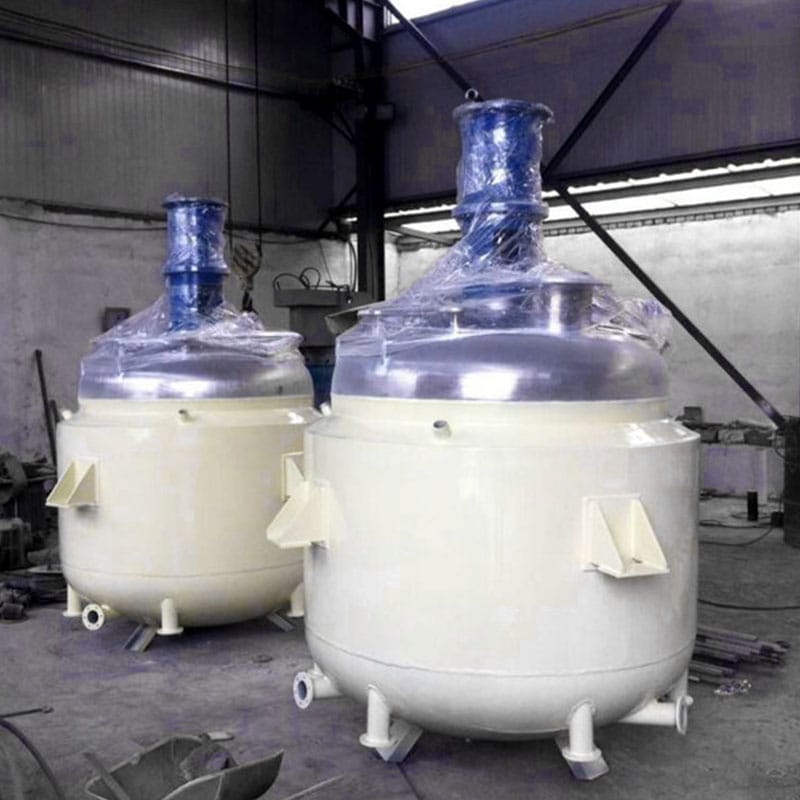
A chemical reactor is not just a stainless steel vessel with an agitator. In real production, it is the controlled environment where raw materials become useful products through heat, mixing, reaction time, pressure management, and material compatibility. Choosing the wrong reactor can lead to slow batches, uneven quality, difficult discharge, excessive cleaning time, corrosion problems, or safety risks.
For buyers in resins, pigments, coatings, adhesives, food ingredients, building materials, fine chemicals, and new material production, reactor selection should begin with the process itself. A useful reactor specification is not only about volume. It should answer a more practical question: what conditions must the material experience inside the reactor to achieve stable, repeatable production?
Yufeng provides industrial reaction and chemical processing equipment, including the electrically heated reactor, external coil reactor, mixers, dispersers, mills, kneaders, and customized chemical equipment systems. Buyers can also review the full chemical equipment product range or send operating requirements through the contact page.
Table of Contents
Start With the Reaction Goal, Not the Reactor Size
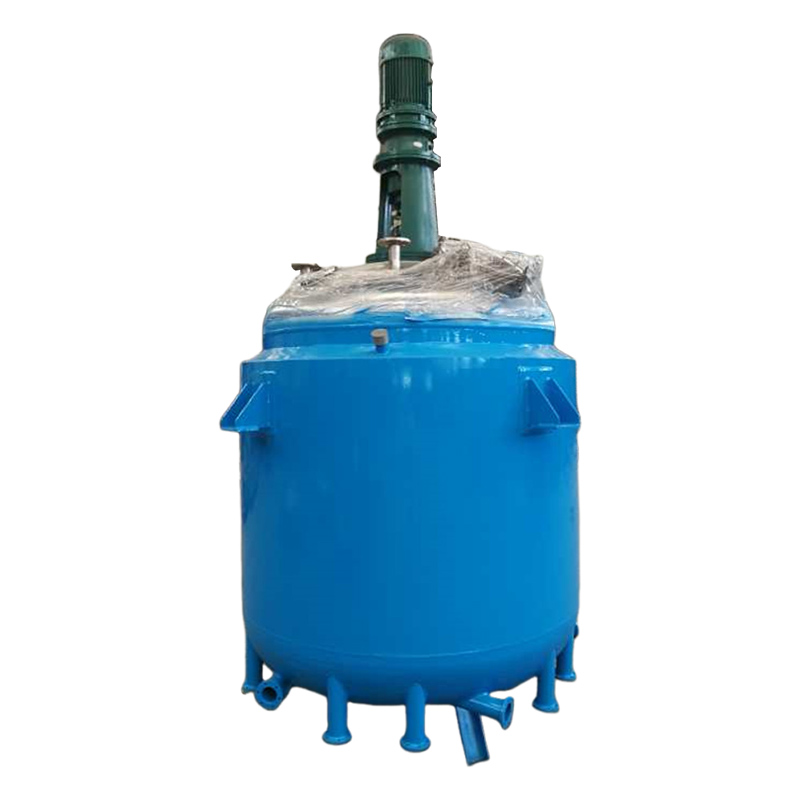
Many buyers start by asking for a 500L, 1000L, or 3000L reactor. Capacity is important, but it should not be the first decision. Two reactors with the same nominal volume may perform very differently if their heating method, agitator type, material contact parts, sealing design, and discharge structure are different.
Before choosing a chemical reactor, define the reaction goal clearly:
| Selection Question | Why It Matters |
|---|---|
| Is the process mainly reaction, mixing, dissolution, heating, or holding? | Determines whether a reactor, mixer, disperser, or kneader is more suitable |
| Is the material low-viscosity liquid, slurry, resin, paste, or high-viscosity compound? | Affects agitator structure, motor power, discharge method, and heat transfer |
| Does the process require heating, cooling, vacuum, or pressure? | Determines jacket, coil, sealing, safety, and control requirements |
| Is the material corrosive, abrasive, sticky, or contamination-sensitive? | Affects stainless steel grade, surface treatment, seals, and cleaning method |
| Is the production batch-based or continuous? | Affects vessel size, feeding method, control logic, and production planning |
A chemical reactor should be selected around the process window, not only the tank capacity.
What a Chemical Reactor Must Control
A chemical reactor is commonly understood as a vessel or system designed to hold materials during a chemical reaction, with important control over temperature, pressure, volume, and mixing conditions. General reactor references also distinguish batch, continuous stirred-tank, plug-flow, semi-batch, and catalytic reactor concepts, which is useful when thinking about industrial process design. You can read a general technical overview from chemical reactor references.
For practical factory purchasing, the most important control factors are:
Temperature
Reaction time
Mixing uniformity
Pressure or vacuum condition
Feeding sequence
Heat transfer efficiency
Material compatibility
Discharge performance
Cleaning and maintenance access
Safety protection
A reactor that performs well in one industry may not be suitable for another. For example, a resin process may require stable heating and controlled agitation, while a pigment or coating process may require strong dispersion before or after the reaction. In that case, the reactor may need to work together with a high speed disperser or grinding equipment.
Batch, Semi-Batch, or Continuous: Which Operation Fits Your Factory?
Most small and medium industrial chemical production uses batch or semi-batch reactors because they offer flexibility. The operator can load materials, heat, react, sample, adjust, cool, and discharge one batch at a time. This is useful for companies producing multiple formulations or different product grades.
Batch operation
Batch operation is suitable when recipes change often, production volume is moderate, or strict formula control is required. It is common in resins, adhesives, pigments, food additives, specialty chemicals, and laboratory-to-production scale-up.
Advantages include flexible formulation, easier sampling, and practical production management. The challenge is that total output depends on the full batch cycle, including feeding, heating, reaction, cooling, discharge, and cleaning.
Semi-batch operation
Semi-batch operation is useful when one material must be added gradually to control reaction rate, heat release, foaming, viscosity growth, or side reactions. This is often important in processes where adding all raw materials at once may create instability.
Continuous operation
Continuous operation is suitable for stable, high-volume production with consistent raw materials and process conditions. It may require more complex feeding, control, monitoring, and downstream equipment.
For many buyers, the best choice is not the most advanced reactor type. It is the operation mode that matches product variety, production volume, operator skill, factory layout, and quality control requirements.
Heating Method: Electric Heating or External Coil?
Heating is one of the most important decisions when selecting a chemical reactor. Poor heating design can cause long batch time, local overheating, uneven viscosity, incomplete reaction, or unstable product quality.
Yufeng offers different reactor heating configurations. The electrically heated reactor is suitable for industries such as pharmaceuticals, building materials, chemicals, pigments, resins, and food. It is designed for rapid heating, high temperature resistance, corrosion resistance, sanitation, automatic heating, and convenient operation.
The external coil reactor uses heating methods such as heat transfer oil heating, open flame heating, or steam heating. It is also designed with stainless steel material contact parts and is used in medicine, chemical, pigment, resin, and food industries.
When comparing heating methods, consider:
Required operating temperature
Heating speed
Temperature uniformity
Factory utility conditions
Whether a boiler or heat transfer oil system is available
Material sensitivity to overheating
Cooling requirement after reaction
Maintenance convenience
Energy efficiency
For many factories, electric heating is attractive when the process needs simpler operation and does not require a separate boiler system. External coil heating may be suitable when existing plant utilities already support steam or heat transfer oil.
Agitation: The Hidden Factor Behind Product Quality
Agitation is often underestimated. Buyers may focus on reactor volume and heating, but poor agitation can cause uneven reaction, temperature gradients, solids settling, material sticking, or inconsistent final quality.
A chemical reactor agitator should match the material condition. Low-viscosity liquids, medium-viscosity resins, slurries, and sticky materials all require different mixing behavior. The goal is not simply to “stir faster.” The goal is to create the right flow pattern for heat transfer, reaction uniformity, and material movement.
Important agitation questions include:
Does the material become more viscous during reaction?
Are powders added into liquid?
Does the process generate foam?
Does the material settle or separate?
Is wall scraping needed?
Does the product need gentle mixing or strong shear?
Is uniform temperature more important than high-speed dispersion?
For applications involving stronger liquid-solid dispersion, a reactor alone may not be enough. Buyers may need to combine the reactor with a high speed disperser or grinding equipment such as a horizontal sand mill depending on the final particle size and product requirements.
Material Compatibility: Stainless Steel Is Not Always the Whole Answer
Many buyers request stainless steel reactors, but “stainless steel” alone is not a complete specification. The correct material depends on corrosion, temperature, cleaning method, product purity, and mechanical wear.
When discussing material compatibility with a chemical reactor manufacturer, clarify:
Raw material composition
Acidity or alkalinity
Solvent presence
Chloride content
Abrasive particles
Operating temperature
Cleaning chemicals
Food or sanitary requirements
Expected service life
The material contact parts are especially important. These may include the inner vessel wall, agitator, baffles, feeding port, discharge valve, seals, and pipelines. Yufeng’s external coil reactor page notes that material-contacting parts are made from stainless steel plates, while its electrically heated reactor is designed for corrosion resistance and sanitary operation.
For buyers who are unsure about material compatibility, it is better to share the raw material information with the equipment manufacturer early. A proper technical discussion can prevent corrosion, contamination, and premature maintenance problems.
Capacity Planning: Do Not Size the Reactor by Batch Volume Alone
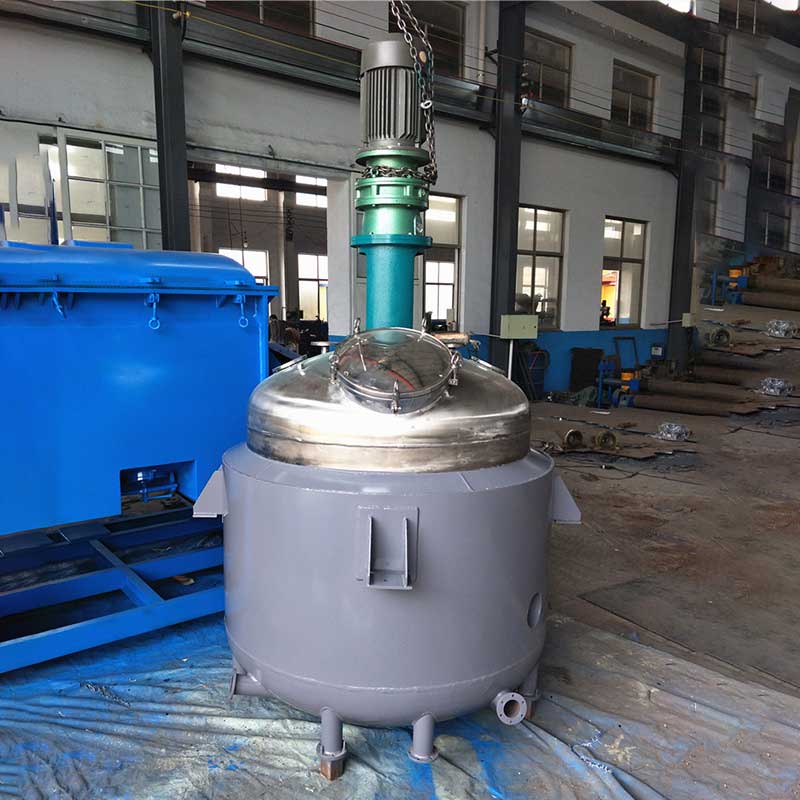
A reactor’s stated capacity does not equal daily output. Real output depends on the full production cycle.
For example, one batch may include:
Raw material charging
Heating time
Reaction holding time
Sampling or quality check
Cooling time
Discharge time
Cleaning time
Preparation for the next batch
A 1000L reactor does not automatically produce more usable product if heating, cooling, or discharge takes too long. In some factories, two smaller reactors may provide more scheduling flexibility than one larger reactor. In other cases, a larger reactor may be more efficient if the formula is stable and batch demand is high.
Before selecting capacity, prepare:
Target daily output
Batch size range
Number of shifts
Expected reaction time
Heating and cooling time
Material density
Filling ratio
Discharge method
Cleaning frequency
Future expansion plan
The NIST equipment pre-purchase guide encourages manufacturers to consider safety, utility needs, long-term cost-effectiveness, and purchase risks before equipment decisions. This is especially relevant for chemical reactors because installation conditions and cycle time strongly affect actual production performance.
Safety: Pressure, Temperature, Venting, and Process Risk
Chemical reactors may involve heating, pressure, vacuum, solvents, flammable materials, toxic materials, gas release, or exothermic reactions. Safety must be discussed before fabrication, not after delivery.
Key safety questions include:
What is the normal operating pressure?
What is the maximum allowable working condition?
Does the reaction release gas?
Is vacuum required?
Does the reaction release heat quickly?
Are flammable or hazardous materials involved?
What instruments are required?
What relief or venting design is needed?
What emergency shutdown logic is required?
What local standards or inspection requirements apply?
For processes involving highly hazardous chemicals, OSHA’s Process Safety Management standard explains requirements intended to prevent or minimize catastrophic releases of toxic, reactive, flammable, or explosive chemicals. Not every project is covered by the same regulation, but the safety mindset is useful for any chemical processing facility.
For pressure-related equipment, the American Society of Mechanical Engineers is widely associated with pressure vessel codes and engineering standards. Buyers should confirm local code requirements, inspection needs, documentation, and design basis according to the destination country and application.
Control System and Instrumentation
A chemical reactor needs more than a vessel and motor. The control system determines how operators monitor and adjust production.
Common control points include:
Temperature display and control
Agitator speed control
Heating system control
Motor overload protection
Vacuum or pressure indication
Emergency stop
Electrical cabinet layout
Safety interlocks
Alarm signals
Optional automation
For simple production, manual or semi-automatic control may be sufficient. For more sensitive processes, buyers may need more accurate temperature control, variable frequency speed regulation, data recording, or integrated control with feeding and discharge systems.
A good chemical reactor supplier should help buyers choose the appropriate control level instead of overcomplicating the system.
Cleaning, Discharge, and Maintenance
A reactor that is easy to operate but difficult to clean can slow down the entire production line. Cleaning and discharge should be considered during selection.
For low-viscosity liquids, bottom discharge may be simple. For viscous resins, pastes, or sticky materials, discharge design becomes more important. Residual material inside the reactor can reduce yield, increase cleaning time, and create cross-contamination risk.
Ask these questions before ordering:
Will the material flow out naturally?
Does the product become sticky after cooling?
Does the vessel need internal polishing?
Is manual cleaning acceptable?
Are quick-opening ports required?
Can operators access key maintenance points?
Are seals easy to inspect and replace?
Does the agitator design create dead zones?
Maintenance planning should also include motor, reducer, seal, bearings, electrical components, heating elements, and pipelines. A reactor designed for maintenance access can reduce downtime and make production more stable over time.
Documentation and Quality Management
For industrial buyers, documentation is part of the equipment value. Drawings, operating manuals, inspection records, material information, and electrical documentation help with installation, training, maintenance, and future audits.
Important documents may include:
General arrangement drawing
Technical specification
Material contact part description
Electrical drawing
Operation manual
Maintenance instructions
Inspection and testing records
Packing list
Installation guidance
For quality management, ISO 9001 is a globally recognized quality management standard that helps organizations improve performance, meet customer expectations, and maintain quality management requirements. Yufeng’s About Us page states that the company integrates R&D, engineering design, precision manufacturing, quality control, sales, and service to provide customizable industrial equipment solutions.
How to Prepare a Better Chemical Reactor RFQ
A detailed RFQ helps the manufacturer recommend the right reactor faster. Instead of asking only for a reactor volume, provide process information.
A useful RFQ should include:
Product name or application industry
Raw material form
Material viscosity
Operating temperature
Heating method preference
Pressure or vacuum requirement
Batch size
Target daily output
Reaction time
Material corrosion or abrasion risk
Agitator requirement
Discharge method
Factory voltage
Utility conditions
Workshop space
Automation requirement
Destination country
Required documentation
A strong RFQ helps avoid under-designed equipment, unnecessary features, and unclear technical expectations.
When to Choose a Yufeng Chemical Reactor
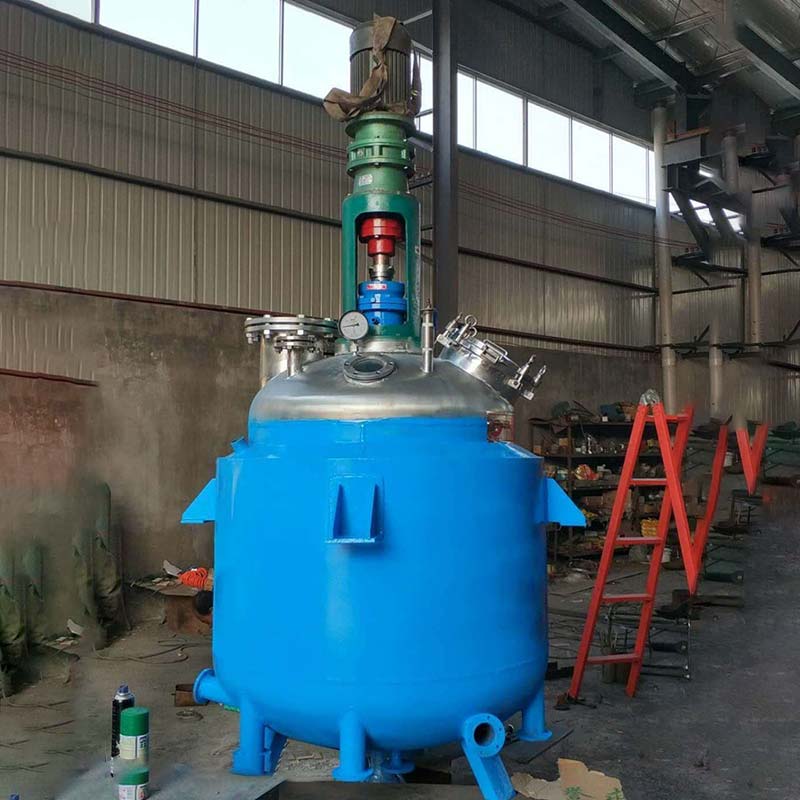
Yufeng is suitable for buyers who need practical industrial chemical equipment with customization options. The company’s chemical product range covers reactors, dispersers, mills, kneaders, mixers, and pelletizing equipment, supporting reaction, heating, dispersion, grinding, kneading, and material handling processes.
A Yufeng chemical reactor may be a good fit when your project involves:
Resin production
Pigment processing
Chemical reaction with heating
Food or building material processing
Medium-viscosity liquid reaction
Corrosion-resistant material contact requirements
Custom heating method
Industrial batch production
Integration with mixing or grinding equipment
Buyers can compare the electrically heated reactor and external coil reactor based on heating method, production conditions, material characteristics, and factory utilities. For customized requirements, submit your process details through Contact Us.
FAQ
What is the most important factor when choosing a chemical reactor?
The most important factor is process suitability. The reactor must match the material, reaction temperature, viscosity, pressure, heating method, agitation requirement, discharge method, and production target.
Is an electrically heated reactor suitable for resin production?
An electrically heated reactor can be suitable for resin-related processes when the required temperature range, viscosity, heating speed, agitation, and material compatibility match the production conditions.
What is the difference between an electrically heated reactor and an external coil reactor?
An electrically heated reactor uses electric heating and can be convenient when a boiler is not required. An external coil reactor can use heating methods such as heat transfer oil, open flame, or steam, depending on the factory’s utility conditions and process requirements.
How do I know what reactor capacity I need?
Capacity should be calculated from batch size, filling ratio, reaction time, heating time, cooling time, discharge time, cleaning time, and daily production target. Nominal volume alone is not enough.
Can one reactor handle different products?
A batch reactor can often handle different products, but only when material compatibility, cleaning requirements, temperature range, agitation, and contamination control are suitable for each formula.
Should I choose a reactor, mixer, disperser, or kneader?
Choose a reactor when chemical reaction and controlled heating are central to the process. Choose a mixer for blending, a disperser for liquid-solid dispersion, and a kneader for high-viscosity materials. Some production lines may require more than one equipment type.
Conclusion
Choosing a chemical reactor is a process engineering decision. The best reactor is not simply the largest vessel or the most complex system. It is the reactor that matches your material behavior, heating requirement, agitation target, safety condition, discharge method, production capacity, and long-term maintenance needs.
Before purchasing, define the reaction goal, clarify temperature and pressure conditions, evaluate material compatibility, calculate real batch cycle time, and prepare a complete RFQ. This approach helps reduce technical risk and improves the chance of stable production after installation.
Yufeng provides chemical reactors and related chemical processing equipment for industrial applications in chemicals, pigments, resins, food, building materials, and new materials. Explore Yufeng’s chemical equipment products or send your project requirements through the contact page to receive a suitable reactor configuration recommendation.