Table of Contents
Introduction

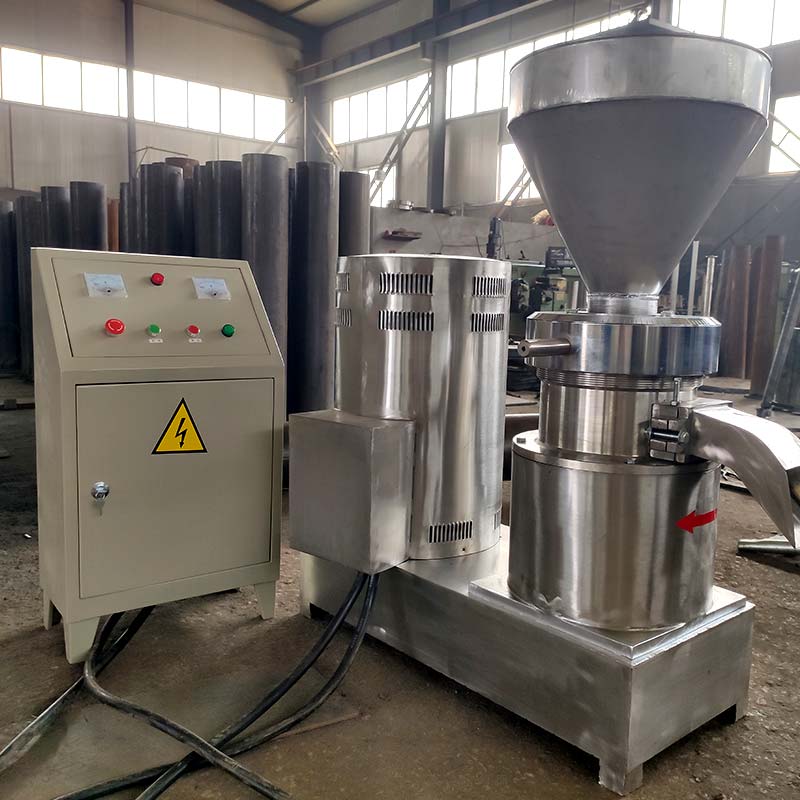
In modern industrial production, colloid mill manufacturers play a critical role in providing equipment used for emulsification, dispersion, and fine particle size reduction. These machines are widely applied in food processing, pharmaceutical production, chemical engineering, and cosmetic manufacturing.
As a manufacturer in this industry, producing and supplying colloid mill equipment means understanding not only machine performance but also how end-users rely on stable, efficient, and hygienic processing systems. For companies seeking consistent output quality, selecting the right supplier is not a purchasing decision alone—it directly affects long-term production efficiency and product competitiveness.
What Is a Colloid Mill and How It Works
A colloid mill is a high-shear machine designed to reduce particle size and create stable emulsions. It works through a high-speed rotor and stator system, where materials are subjected to intense mechanical shear forces.
The process typically includes:
- Feeding raw material into the hopper
- High-speed rotor-stator grinding and shearing
- Controlled gap adjustment for precision output
- Continuous or batch discharge depending on system design
This technology is essential for producing smooth, uniform mixtures in industries where consistency is critical, such as sauces, creams, ointments, and chemical emulsions.
Why Choosing the Right Colloid Mill Manufacturer Matters
Selecting reliable colloid mill manufacturers directly impacts:
- Production efficiency and stability
- Final product texture and consistency
- Equipment lifespan and maintenance cost
- Compliance with industrial hygiene standards
Poor-quality machines often lead to uneven emulsification, frequent breakdowns, and increased operational downtime. In contrast, professionally engineered colloid mills ensure stable output and lower long-term production costs.
Key Factors to Evaluate Reliable Colloid Mill Manufacturers
When sourcing equipment, several key factors should be considered:
- Manufacturing experience and engineering capability
- Customization options for different production needs
- Quality control systems and international certifications
- Material selection and precision machining
- Export capability and global service support
Evaluation Overview Table
| Evaluation Factor | What to Look For | Why It Matters |
|---|---|---|
| Material Quality | Stainless steel 304/316 | Ensures hygiene and corrosion resistance |
| Certification | CE / ISO standards | Confirms manufacturing compliance |
| Customization | Adjustable rotor-stator gap | Supports different viscosity materials |
| After-sales service | Spare parts & technical support | Reduces downtime and maintenance risk |
| Production capacity | Large-scale manufacturing ability | Ensures stable supply chain |
Material and Build Quality Standards in Colloid Mill Equipment
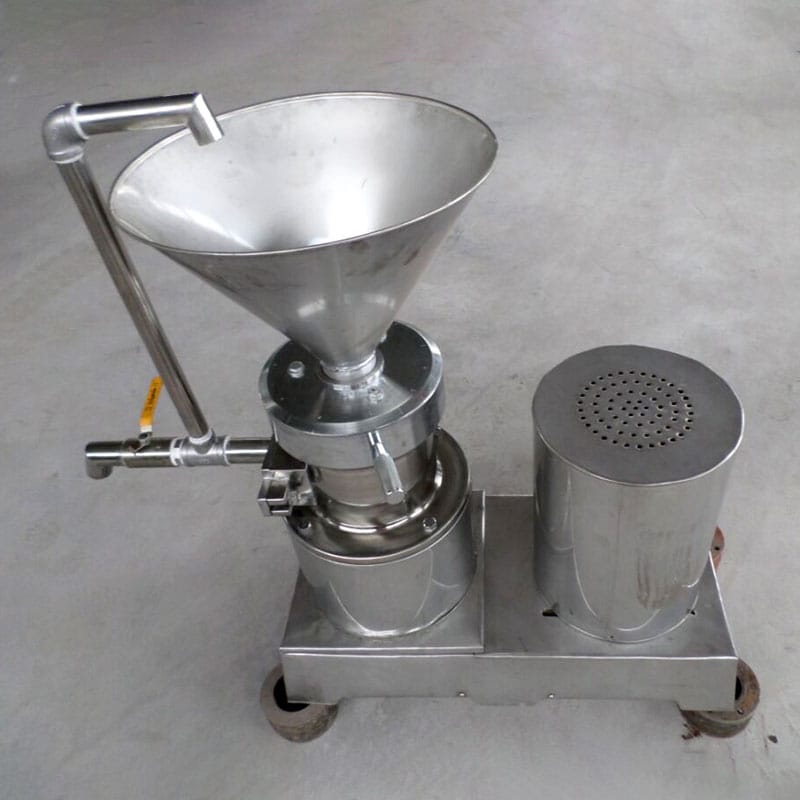
High-quality colloid mill manufacturers prioritize durable construction and precision engineering. Stainless steel is commonly used for food-grade and pharmaceutical applications due to its corrosion resistance and hygienic properties.
Key technical requirements include:
- High-precision rotor and stator alignment
- Wear-resistant grinding surfaces
- Stable motor performance under continuous load
- Heat resistance for long production cycles
These factors ensure consistent emulsification performance and reduce maintenance frequency.
Application-Specific Requirements for Different Industries
Colloid mills are widely used across multiple industries:
- Food industry: peanut butter, sauces, dressings, jam
- Pharmaceutical industry: ointments, creams, suspensions
- Chemical industry: adhesives, paints, emulsions
- Cosmetic industry: lotions, gels, skincare formulations
Each application requires specific machine configurations, such as viscosity handling, particle size control, and sanitary design standards.
Comparing Global Colloid Mill Manufacturers
The global market includes manufacturers from China, Europe, and other industrial regions. Each has different strengths:
- Chinese manufacturers: cost-effective, large-scale production, flexible customization
- European manufacturers: advanced automation, high-end engineering standards
- Other regions: niche specialization and limited production capacity
Many international buyers prefer direct factory sourcing due to better pricing and customization flexibility without compromising quality.
Customization Options from Professional Colloid Mill Manufacturers
Modern industrial users often require tailored solutions. Reliable colloid mill manufacturers provide:
- Adjustable grinding gap systems
- Variable motor power configurations
- Inline and batch processing models
- Integration with complete production lines
- Special designs for high-viscosity materials
Customization ensures the equipment fits specific production requirements rather than forcing adjustments in the production process.
Common Mistakes When Selecting Colloid Mill Suppliers
Many buyers face challenges due to incorrect supplier selection. Common mistakes include:
- Choosing based only on low price
- Ignoring long-term maintenance support
- Overlooking certification and compliance standards
- Not verifying manufacturer experience
- Failing to evaluate material quality
These mistakes often lead to higher long-term costs and unstable production performance.
How Professional Colloid Mill Manufacturers Improve Production Efficiency
High-quality manufacturers focus on optimizing industrial performance through:
- Stable emulsification and consistent particle size
- Reduced energy consumption during operation
- Lower maintenance downtime
- Improved automation integration
- Higher production throughput
This directly benefits manufacturers seeking scalable and efficient production systems.
After-Sales Service and Technical Support Importance
Reliable support is a key factor when selecting equipment suppliers. Professional colloid mill manufacturers typically provide:
- Installation and commissioning guidance
- Operator training programs
- Spare parts supply chain support
- Remote technical troubleshooting
- Long-term maintenance services
Strong after-sales support ensures uninterrupted production and reduces operational risks.
Industry Trends in Colloid Mill Manufacturing Technology

The colloid mill industry continues to evolve with new technological advancements:
- Energy-efficient motor systems
- Improved sanitary design for food-grade applications
- Smart control and automation integration
- Higher precision emulsification systems
- Increased demand for customized industrial solutions
These trends reflect the growing need for efficiency, hygiene, and automation in global manufacturing.
Conclusion
Choosing reliable colloid mill manufacturers is essential for achieving long-term production stability, product quality, and operational efficiency. As a manufacturer in this field, we understand that equipment performance directly impacts industrial success across food, pharmaceutical, chemical, and cosmetic sectors.
By evaluating material quality, customization capability, certification standards, and after-sales support, businesses can make informed decisions that reduce risk and improve productivity. Working with experienced manufacturers ensures not only better machinery performance but also stronger long-term supply chain reliability and business growth.
FAQ
What do colloid mill manufacturers do?
Colloid mill manufacturers design and produce high-shear milling equipment used for emulsifying, dispersing, and refining materials in industries such as food, pharmaceuticals, chemicals, and cosmetics.
How do I choose reliable colloid mill manufacturers?
You should evaluate manufacturing experience, material quality (such as stainless steel), certification standards (CE/ISO), customization options, and after-sales technical support before selecting a supplier.
What industries use colloid mill machines from manufacturers?
Colloid mill equipment is widely used in food processing (sauces, peanut butter), pharmaceuticals (ointments, suspensions), chemical production (emulsions, adhesives), and cosmetic manufacturing (creams, lotions).
Why is manufacturer quality important for colloid mill machines?
High-quality colloid mill manufacturers ensure stable emulsification performance, longer machine lifespan, lower maintenance costs, and consistent product quality in industrial production.
Do colloid mill manufacturers offer customized solutions?
Yes, professional manufacturers often provide customization options such as motor power selection, rotor-stator gap adjustment, and integration with production lines to meet different industrial requirements.