In most industrial equipment systems, hydraulic cylinders are not treated as simple components anymore. They sit at the center of force transmission, movement control, and overall machine stability. Once a cylinder performs poorly, the entire system starts to show issues—slow response, leakage, misalignment, or unexpected downtime.
That’s why choosing hydraulic cylinder suppliers is no longer a basic sourcing task. It has become a technical decision that affects long-term equipment performance, especially in construction machinery, agricultural systems, mining equipment, and industrial automation lines.
This article takes a practical, manufacturer-side perspective and focuses on what actually matters when evaluating suppliers in real industrial conditions.
Table of Contents
What Hydraulic Cylinder Suppliers Really Contribute to a System (Beyond Supply)

It’s easy to assume suppliers simply “provide cylinders,” but in practice, their role is much deeper.
A well-developed supplier system influences:
- How stable the hydraulic force output remains under load
- Whether sealing performance holds under long cycles
- How well the cylinder integrates into different machine structures
- The overall reliability of motion control under harsh environments
In real applications, especially where equipment runs continuously, small differences in machining accuracy or sealing design can change the entire operating behavior of a machine.
That’s why experienced buyers usually evaluate suppliers based on engineering consistency rather than catalog variety.
Not All Hydraulic Cylinders Serve the Same Purpose
One common mistake in procurement is treating hydraulic cylinders as interchangeable. In reality, their internal structures are designed for very different working conditions.
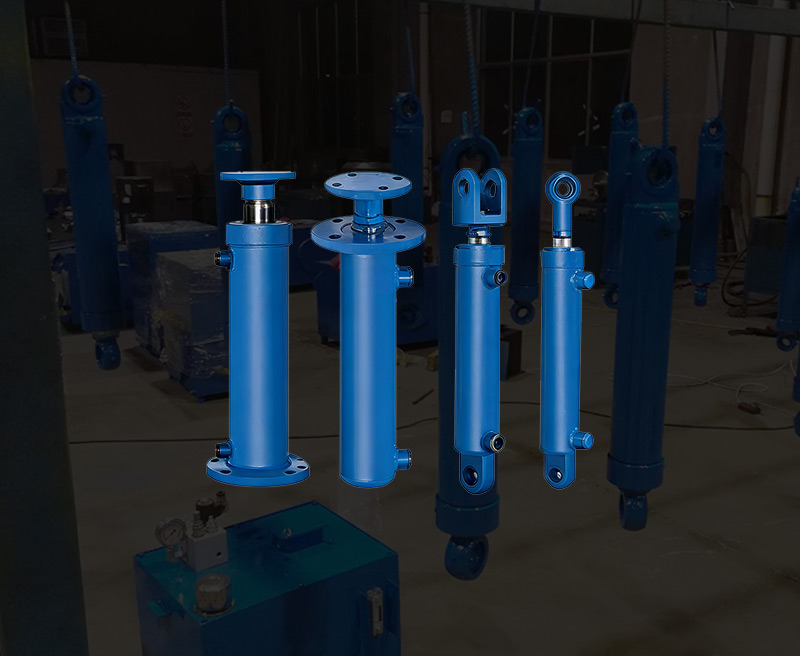
Typical industrial configurations include:
- Single-acting cylinders used for directional force applications
- Double-acting cylinders for controlled push-and-pull motion
- Welded cylinders designed for high-pressure environments
- Tie-rod structures used in standardized industrial systems
- Telescopic cylinders where space and stroke requirements conflict
- Application-specific OEM designs for integrated machinery systems
What matters here is not just the type itself, but whether the supplier understands why a certain structure is needed in a specific machine.
What Separates Reliable Hydraulic Cylinder Suppliers from Average Ones
From a manufacturing perspective, consistency is more important than output scale.
Reliable suppliers usually show stability in areas such as:
- Machining precision on cylinder barrels and rods
- Welding quality that does not distort under pressure
- Heat treatment control that affects fatigue life
- Seal selection matched to real operating environments
- Pressure testing that reflects actual working conditions
These factors are not always visible in product listings, but they show up clearly during long-term use.
In many cases, performance differences only become obvious after equipment has been running for a while—not during initial installation.
Why Direct Manufacturers Are Often Preferred in Industrial Sourcing
In hydraulic systems, communication accuracy matters as much as production quality.
Working directly with a manufacturer usually means:
- Technical requirements are understood without interpretation loss
- Adjustments can be made during the design stage
- Production consistency is easier to control
- OEM requirements can be integrated more smoothly
- Long-term supply remains stable across batches
When there are multiple layers between buyer and manufacturer, small technical details are more likely to be misunderstood. In hydraulic systems, those small details often decide whether the cylinder performs correctly or not.
Custom Hydraulic Cylinders and Why OEM Requirements Keep Increasing
Standard cylinders can cover many applications, but modern machinery design is moving toward tighter integration.
Common customization needs include:
- Stroke length adjustments based on machine geometry
- Bore and rod sizing matched to load requirements
- Mounting structures designed for specific assemblies
- Surface protection adapted to working environments
- Pressure specifications aligned with duty cycles
OEM hydraulic cylinder development is usually not a single-step process. It typically involves design confirmation, sample validation, and testing under real working conditions before full production begins.
Where Hydraulic Cylinders Are Actually Tested in Real Life Applications
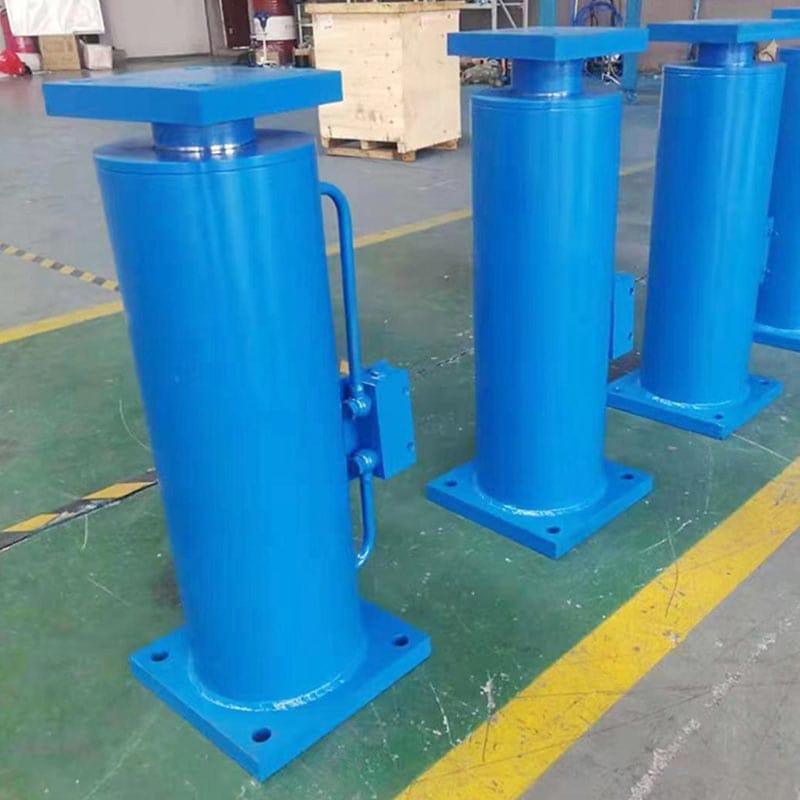
Different industries expose hydraulic cylinders to very different working conditions.
For example:
- Construction machinery introduces impact loads and vibration
- Mining systems operate under continuous high-pressure cycles
- Agricultural machinery faces dust, moisture, and variable loads
- Industrial automation requires repeatable precision movement
A supplier who understands these differences can design cylinders that behave consistently in real environments, not just in theoretical specifications.
Testing and Inspection: What Happens Before a Cylinder Leaves the Factory
A properly controlled production system does not rely on final inspection alone. Testing is usually integrated throughout manufacturing.
Typical control steps include:
- Pressure holding tests to check sealing stability
- Fatigue testing to simulate long-term operation
- Dimensional inspection for assembly accuracy
- Surface finish checks to reduce friction and wear
- Welding inspection to detect hidden structural risks
These steps are not formalities. They directly affect whether a cylinder performs reliably after installation.
How Buyers Usually Evaluate Suppliers Before Making a Decision
In real procurement workflows, evaluation is often more practical than theoretical.
Buyers tend to focus on:
- How clearly technical specifications are communicated
- Whether samples reflect production consistency
- Whether the supplier can explain design choices
- How quickly engineering feedback is provided
- Whether long-term support is structured and reliable
Over time, many buyers shift from “product comparison” to “supplier behavior evaluation,” because consistency becomes more important than initial appearance.
Problems That Usually Come from Low-Quality Sourcing Decisions
When hydraulic cylinder quality is unstable, issues rarely stay isolated.
Common system-level problems include:
- Gradual hydraulic oil leakage
- Rod deformation under uneven stress
- Loss of pressure stability
- Increased maintenance frequency
- Misalignment affecting connected components
What makes these problems difficult is that they often appear after installation, not immediately. By then, they may already affect the entire machine system.
Industry Direction: Where Hydraulic Cylinder Supply Is Heading
The hydraulic cylinder industry is gradually shifting away from standardized production models.
Several clear trends are emerging:
- Stronger demand for customized engineering solutions
- Increased use of precision manufacturing processes
- Higher expectations for durability under extreme conditions
- More direct collaboration between manufacturers and equipment builders
- Focus shifting from unit supply to system performance
This means suppliers are no longer evaluated only by what they produce, but by how well they understand application environments.
Why Direct Manufacturer Partnerships Improve Long-Term Equipment Performance
From a practical standpoint, working directly with a hydraulic cylinder manufacturer creates fewer uncertainties.
It helps with:
- More accurate technical alignment during design
- Faster response when equipment requirements change
- Better consistency across production batches
- Reduced risk of mismatch in hydraulic systems
- Stronger long-term supply reliability
In industrial operations, stability is often more valuable than short-term convenience.
Conclusion
Choosing hydraulic cylinder suppliers is ultimately about understanding how much technical control and consistency a supplier can bring into your system. The difference between an average supplier and a capable manufacturer is usually not visible in product descriptions—it becomes clear only when equipment is running under real industrial pressure.
For buyers working with construction machinery, agricultural systems, mining equipment, or industrial automation, supplier selection directly influences operational stability and maintenance frequency. A well-qualified manufacturer does more than deliver components; it supports the long-term reliability of the entire hydraulic system.
FAQ
Q1: What should I look for in reliable hydraulic cylinder suppliers?
A: Focus on manufacturing capability, quality control systems, material selection, and pressure testing standards. Consistency in production and engineering support is often more important than product variety.
Q2: Why is choosing a manufacturer better than a trading supplier?
A: Direct manufacturers provide better technical communication, stable production quality, and stronger customization capability, which helps reduce mismatch risks in hydraulic system applications.
Q3: Can hydraulic cylinders be customized for different machines?
A: Yes. Most industrial applications require customization in stroke length, bore size, mounting type, and pressure rating to match specific equipment structures and working conditions.
Q4: What industries commonly use hydraulic cylinder suppliers?
A: Hydraulic cylinders are widely used in construction machinery, mining equipment, agricultural systems, and industrial automation where controlled linear force is required.
Q5: How do suppliers ensure hydraulic cylinder quality before delivery?
A: Reliable suppliers conduct pressure testing, fatigue testing, dimensional inspection, and welding quality checks to ensure performance stability under real working conditions.