Hydraulic cylinders are not simple replacement parts. For industrial buyers, equipment manufacturers, repair companies and project engineers, choosing the right hydraulic cylinder type can directly affect lifting force, machine stability, service life, maintenance frequency and operating safety. A cylinder that looks correct in size may still fail early if the stroke, pressure rating, mounting style, rod strength or working environment is not properly matched.
This guide explains the major hydraulic cylinder types from a buyer’s point of view. Instead of only listing definitions, it focuses on how each type performs in real equipment, when a standard cylinder may be enough, and when a custom hydraulic cylinder manufacturer should be involved early in the selection process.
Table of Contents
Why Hydraulic Cylinder Types Matter in Equipment Performance
A hydraulic cylinder converts pressurized fluid into linear force and motion. In industrial equipment, that motion may be used to lift, push, pull, tilt, clamp, press, steer or position a load. The general principle may be simple, but the cylinder structure must match the application. Selection guides commonly emphasize that bore size, stroke, pressure, force and mounting conditions need to work together, rather than being considered separately.
For example, a lifting platform may require smooth vertical motion and stable load support. A dump truck may need a long stroke in a compact installation space. A press machine may require high force with repeatable movement. A construction machine may need a compact welded hydraulic cylinder that can handle shock, vibration and dirty working conditions.
That is why industrial buyers should not ask only, “What size cylinder do I need?” A better question is: Which hydraulic cylinder type is suitable for my machine, load, stroke, pressure, mounting position and working environment?
The Main Hydraulic Cylinder Types Used in Industry
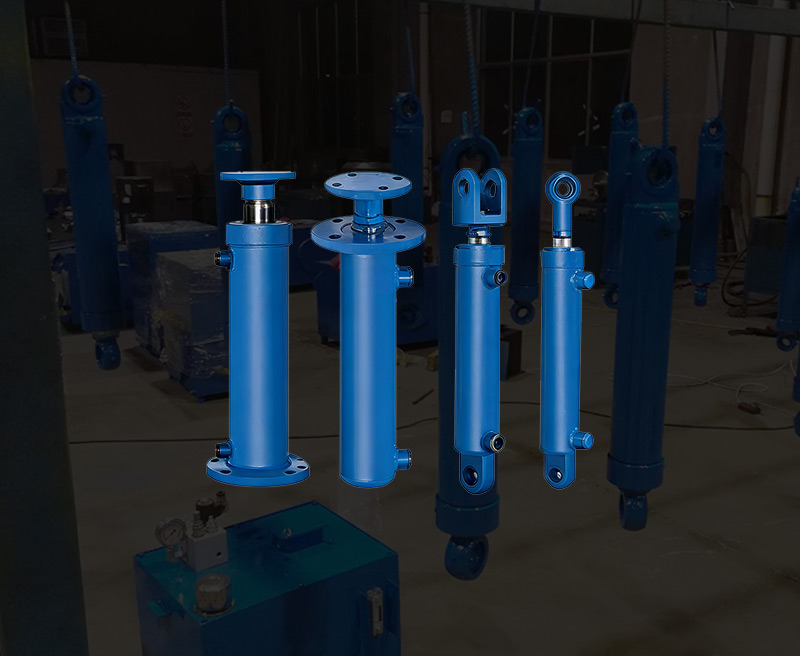
Most industrial hydraulic cylinders can be grouped by their operating method, body structure, stroke design and mounting arrangement. The most widely discussed hydraulic cylinder types include single acting hydraulic cylinders, double acting hydraulic cylinders, telescopic hydraulic cylinders, tie rod hydraulic cylinders and welded hydraulic cylinders.
Each type has a different role in industrial machinery. Some are better for simple one-direction force. Some provide controlled movement in both directions. Some are designed for compact installation. Others are made for heavy-duty equipment where strength and durability are more important than easy disassembly.
The table below gives a practical overview:
| Hydraulic Cylinder Type | Main Feature | Common Applications | Buyer Focus |
|---|---|---|---|
| Single acting hydraulic cylinder | Hydraulic force in one direction | Lifting, clamping, pressing | Simple motion and lower control complexity |
| Double acting hydraulic cylinder | Hydraulic force in both directions | Mobile machinery, automation, industrial equipment | Better control during extension and retraction |
| Telescopic hydraulic cylinder | Multi-stage long stroke | Dump trucks, trailers, lifting systems | Long travel in limited space |
| Tie rod hydraulic cylinder | Bolted tie rod structure | Industrial machinery, agricultural equipment | Easier maintenance and standardized structure |
| Welded hydraulic cylinder | Compact welded body | Construction, mining, heavy-duty machinery | Strength, compactness and harsh-environment use |
Single Acting Hydraulic Cylinder: Simple Force in One Direction
A single acting hydraulic cylinder uses hydraulic pressure to move the piston in one direction. The return movement is usually completed by gravity, spring force or external load. This makes the structure relatively simple and suitable for applications where controlled force is only needed in one direction.
Single acting hydraulic cylinders are often used in lifting, pressing, clamping and simple material handling systems. They can be a practical choice when the machine design does not require hydraulic power for both extension and retraction.
However, buyers should be careful about return speed, load position and installation direction. If the return motion depends on gravity, the equipment must be designed so that the cylinder can retract reliably under actual working conditions. A single acting hydraulic cylinder may not be ideal for equipment that needs precise two-way control or frequent cycling.
Best-fit applications include:
| Application | Why Single Acting Cylinders May Fit |
|---|---|
| Simple lifting equipment | Force is mainly needed in the lifting direction |
| Pressing or clamping systems | One-direction force is enough for the working action |
| Dump or tilt mechanisms | Gravity may assist the return movement |
| Compact auxiliary mechanisms | Simple control structure can reduce system complexity |
Double Acting Hydraulic Cylinder: Better Control in Both Directions

A double acting hydraulic cylinder uses hydraulic pressure to move the piston in both extension and retraction directions. This design is widely used in industrial and mobile machinery because it provides better motion control, especially where the load must be pushed and pulled with force.
Compared with a single acting cylinder, a double acting hydraulic cylinder is usually a better choice when the equipment requires accurate positioning, stable return movement, frequent operation or controlled force in both directions.
Typical applications include construction machinery, industrial automation equipment, agricultural machinery, lifting systems, presses and production equipment. When the machine must work under changing loads or different angles, double acting cylinders often provide more predictable performance.
For buyers, the key decision is not only whether the cylinder can extend and retract. The more important questions include:
| Selection Question | Why It Matters |
|---|---|
| What force is required in each direction? | Extension and retraction force may differ because of rod area |
| How often will the cylinder cycle? | Frequent operation affects seal and wear design |
| Is precise positioning required? | Control valves, load conditions and cylinder quality all matter |
| Will the cylinder face side load? | Misalignment can cause rod, seal and bearing wear |
A double acting hydraulic cylinder is often the default choice for demanding industrial equipment, but it still needs to be correctly sized and mounted.
Telescopic Hydraulic Cylinder: Long Stroke in Compact Space
A telescopic hydraulic cylinder uses multiple nested stages to achieve a much longer stroke than a standard cylinder of similar closed length. This makes it valuable when the equipment has limited installation space but requires extended movement.
Telescopic hydraulic cylinders are commonly used in dump trucks, trailers, lifting equipment, special vehicles and material handling systems. The main advantage is clear: long travel can be achieved without requiring a long cylinder body when fully retracted.
Industrial buyers should pay attention to stage design, extension sequence, stability, load direction and return method. Telescopic cylinders may be single acting or double acting, depending on how the equipment needs to extend and retract.
A telescopic hydraulic cylinder is suitable when:
| Requirement | Why Telescopic Design Helps |
|---|---|
| Long stroke | Multi-stage structure provides extended travel |
| Limited installation space | Compact closed length saves machine space |
| Tilting or lifting movement | Common in dump and lifting systems |
| Special vehicle equipment | Long movement can be integrated into compact frames |
The main mistake buyers make is choosing a telescopic cylinder only by stroke length. In real applications, pressure, stage overlap, mounting position, load angle and stability are just as important.
Tie Rod Hydraulic Cylinder: Practical for Standard Industrial Use
A tie rod hydraulic cylinder is built with tie rods that hold the cylinder barrel and end caps together. This structure is often used in industrial equipment because it is relatively easy to maintain and can be produced in standardized configurations.
Tie rod cylinders are commonly found in factory equipment, agricultural machinery, light-to-medium industrial systems and automation equipment. They are especially useful where maintenance access is important and the working environment is not extremely harsh.
The advantage for buyers is serviceability. If seals or internal components need to be inspected, the structure is often easier to disassemble than some welded designs. However, tie rod cylinders may not always be the best choice for compact spaces, high shock loads or dirty outdoor environments.
Tie rod hydraulic cylinders are worth considering when the buyer needs:
| Buyer Requirement | Tie Rod Cylinder Advantage |
|---|---|
| Standard industrial use | Mature and widely used structure |
| Easier maintenance | Bolted construction supports disassembly |
| Moderate working pressure | Suitable for many factory applications |
| Repeatable machine design | Good for standardized equipment platforms |
Welded Hydraulic Cylinder: Compact Strength for Heavy-Duty Machinery
A welded hydraulic cylinder has a welded body structure, usually with a more compact design than many tie rod cylinders. This makes it suitable for heavy-duty machinery, mobile equipment and applications where space is limited.
Welded cylinders are often selected for construction machinery, mining equipment, lifting systems, agricultural equipment and heavy industrial machines. Their compact body and strong construction make them useful in applications exposed to vibration, impact, dust, mud or outdoor working conditions. Industry discussions commonly associate welded cylinder structures with compact design and demanding equipment environments.
For industrial buyers, a welded hydraulic cylinder is usually a good option when the equipment requires:
| Requirement | Why Welded Cylinders Fit |
|---|---|
| Compact installation | Welded body can save space |
| Heavy-duty use | Strong structure supports demanding loads |
| Outdoor machinery | Suitable for mobile and harsh environments |
| Custom equipment | Body, mounting and rod design can be adapted |
The trade-off is that welded cylinders are often less convenient to disassemble than tie rod cylinders. That does not make them less reliable. It simply means the buyer should focus more on correct design, material selection, seal quality and manufacturing precision from the beginning.
Hydraulic Cylinder Types by Application
In real purchasing decisions, buyers usually do not start with the cylinder name. They start with the machine. A customer may search for a hydraulic cylinder for construction equipment, a hydraulic cylinder for agricultural machinery, a hydraulic cylinder for dump truck applications or a heavy duty hydraulic cylinder for mining equipment.
That is why application-based selection is often more practical than definition-based selection.
Construction Equipment
Construction machines often require compact, strong and durable hydraulic cylinders. Excavators, loaders, cranes, bulldozers and concrete machinery work under changing loads, vibration and outdoor conditions. Welded hydraulic cylinders and custom heavy-duty cylinders are often suitable for these environments.
Key considerations include rod strength, sealing performance, side-load resistance, mounting stability and surface protection.
Agricultural Machinery
Agricultural equipment may use hydraulic cylinders for lifting, steering, tilting, folding and positioning. Buyers often need cylinders that can handle dust, moisture, outdoor storage and seasonal workload changes.
Common options include tie rod hydraulic cylinders, welded cylinders and custom cylinders for agricultural implements.
Industrial Machinery
Industrial machinery may require repeatable movement, stable pressure performance and predictable service life. Press machines, production lines, clamping systems, automation equipment and forming machines often use double acting cylinders or tie rod cylinders.
For this segment, bore size, stroke length, pressure rating, cycle frequency and mounting accuracy are important.
Dump Trucks and Lifting Systems
Dump trucks, trailers and lifting systems often need long stroke movement. Telescopic hydraulic cylinders are widely used because they provide long travel while maintaining a compact retracted length.
The buyer should confirm load direction, installation angle, stage design, safety requirements and return method before finalizing the cylinder type.
How to Choose the Right Hydraulic Cylinder Type

Choosing the right hydraulic cylinder type is not a single-step decision. A reliable selection process should combine mechanical requirements, hydraulic system conditions and working environment. Several selection guides emphasize that bore size, stroke, pressure, mounting and force requirements must be evaluated together.
A practical selection process can follow this order:
| Step | What to Confirm | Why It Matters |
|---|---|---|
| 1 | Application and movement | Determines single acting, double acting or telescopic design |
| 2 | Required force | Helps calculate bore size and system pressure |
| 3 | Stroke length | Defines movement distance and cylinder structure |
| 4 | Working pressure | Affects barrel, rod, seal and safety design |
| 5 | Mounting style | Controls alignment, load path and installation fit |
| 6 | Working environment | Determines material, coating and seal requirements |
| 7 | Cycle frequency | Affects heat, wear and service life |
| 8 | Custom requirements | Determines whether standard or OEM design is needed |
A buyer who only provides outer dimensions may receive a cylinder that fits physically but does not perform correctly. A better inquiry includes bore size, rod diameter, stroke length, working pressure, mounting type, load direction, operating environment and equipment photos or drawings.
Bore Size, Stroke Length and Pressure Rating
Bore size affects the force a hydraulic cylinder can generate. Stroke length determines how far the cylinder moves. Pressure rating defines the working pressure the cylinder is designed to handle. These three factors are closely connected.
A larger bore can generate more force at the same pressure, but it may also increase cylinder size and oil volume requirements. A longer stroke provides more travel, but it may increase bending risk if the rod is not properly supported. Higher pressure can increase force output, but it also requires stronger components and suitable seals.
For industrial buyers, the goal is not to choose the largest cylinder. The goal is to choose a cylinder that provides enough force, fits the machine structure, works safely within the hydraulic system and supports the expected duty cycle.
Mounting Style: The Often-Ignored Selection Factor
Mounting style is one of the most important but often overlooked parts of hydraulic cylinder selection. Common hydraulic cylinder mounting types include clevis mount, flange mount, trunnion mount, foot mount and side lug mount. Technical guides often point out that mounting style affects load path, movement arc, alignment and cylinder stability.
Poor mounting selection can create side load, uneven wear, rod bending, seal damage or connection failure. A cylinder is designed to produce linear force. If the machine structure forces the rod to work at an angle, the cylinder may fail even if the bore and stroke are correct.
A simple mounting comparison:
| Mounting Type | Typical Use | Buyer Attention |
|---|---|---|
| Clevis mount | Pivoting movement | Check pin size and alignment |
| Flange mount | Fixed straight-line force | Good frame support is required |
| Trunnion mount | Arc movement and compact design | Position affects stability |
| Foot mount | Stationary installation | Avoid side load and frame distortion |
| Side lug mount | Machine frame mounting | Alignment must be controlled carefully |
If the equipment has angular movement, vibration or changing load direction, mounting design should be discussed early with the cylinder manufacturer.
Materials, Seals and Surface Treatment
The body structure is only one part of hydraulic cylinder performance. Barrel material, piston rod quality, seals, guide rings, bushings, ports, welding quality and surface treatment all affect durability.
For harsh working conditions, seal selection is especially important. Contamination, corrosion, side loading, over-pressurizing and extreme temperature are commonly cited causes of hydraulic cylinder failure.
Industrial buyers should consider:
| Component | Why It Matters |
|---|---|
| Cylinder barrel | Affects pressure resistance and internal surface quality |
| Piston rod | Affects bending strength, wear resistance and corrosion protection |
| Seals | Control leakage and service life |
| Wear rings | Help reduce metal-to-metal contact |
| Surface coating | Improves corrosion and wear resistance |
| Welding quality | Important-metal contact |
| Surface coating | Improves corrosion and wear resistance |
| Welding quality | Important for welded hydraulic cylinders |
| Port design | Affects oil flow and installation compatibility |
In outdoor, mining, marine, agricultural or construction environments, standard materials may not always be enough. Buyers should explain the working environment clearly before ordering.
When Standard Hydraulic Cylinders Are Not Enough
Standard hydraulic cylinders can work well in many machines, but custom hydraulic cylinders become necessary when the application has special requirements. A custom design may be needed when the equipment has limited installation space, unusual mounting points, high load, long stroke, special pressure requirements, harsh environment, replacement compatibility issues or OEM production needs.
A custom hydraulic cylinder manufacturer can adjust bore size, rod diameter, stroke length, mounting ends, port position, seal system, surface treatment and overall structure according to the machine.
Buyers should consider custom hydraulic cylinders when:
| Situation | Why Custom Design Helps |
|---|---|
| Existing cylinder fails repeatedly | Design may not match real load or alignment |
| Machine space is limited | Cylinder structure can be adapted |
| Standard stroke is not suitable | Stroke can be built around equipment movement |
| Harsh environment is involved | Materials and seals can be upgraded |
| OEM equipment requires consistency | Drawings and batch specifications can be controlled |
| Replacement cylinder is unavailable | A new cylinder can be made from sample or drawing |
For manufacturers and equipment builders, custom cylinders are not only about non-standard size. They are about matching the cylinder to the machine’s actual working conditions.
What Buyers Should Send to a Hydraulic Cylinder Manufacturer
A clear inquiry helps the manufacturer respond faster and more accurately. Instead of sending only a photo, buyers should provide as much technical information as possible.
Recommended information includes:
| Information Needed | Example Details |
|---|---|
| Application | Excavator, press machine, trailer, lifting platform |
| Cylinder type | Single acting, double acting, telescopic, welded, tie rod |
| Bore size | Internal cylinder diameter |
| Rod diameter | Piston rod diameter |
| Stroke length | Required movement distance |
| Closed and open length | Important for installation fit |
| Working pressure | Normal and maximum pressure |
| Mounting type | Clevis, flange, trunnion, foot or custom mount |
| Port size and position | Helps match hydraulic hose layout |
| Working environment | Dust, moisture, temperature, corrosion, outdoor use |
| Quantity | Prototype, replacement or batch production |
| Drawings or samples | Best for OEM or replacement projects |
This information allows the manufacturer to suggest the right hydraulic cylinder type instead of simply quoting a part that may not work in the machine.
Common Selection Mistakes Buyers Should Avoid
Many hydraulic cylinder problems begin before the cylinder is installed. Wrong selection can lead to leakage, unstable movement, bent rods, broken mounts, overheating, poor lifting force or short service life.
Here are common mistakes:
| Mistake | Possible Result |
|---|---|
| Choosing only by external size | Cylinder may fit but fail under load |
| Ignoring pressure rating | Over-pressurizing can damage components |
| Selecting the wrong mounting style | Misalignment and side loading may occur |
| Underestimating stroke requirements | Machine movement may be limited |
| Ignoring working environment | Corrosion, seal wear or contamination may increase |
| Using standard cylinders for special equipment | Repeated failure or poor performance |
| Not discussing the application with the manufacturer | Wrong type or structure may be selected |
Side loading deserves special attention. Hydraulic cylinders are designed mainly for linear force. When the load pushes sideways against the rod, wear increases and failure risk rises. This is why correct mounting, alignment and machine structure are just as important as cylinder size.
Why Work Directly with a Hydraulic Cylinder Manufacturer?
For industrial buyers, working directly with a hydraulic cylinder manufacturer provides advantages beyond product supply. A manufacturer can review drawings, understand the application, recommend the right cylinder type and produce custom solutions when standard models are not suitable.
This is especially important for OEM equipment, replacement projects, heavy-duty machinery and applications with harsh working conditions. Direct technical communication can reduce selection errors and improve long-term reliability.
A capable manufacturer can support:
| Manufacturing Support | Value for Buyers |
|---|---|
| Application review | Helps match cylinder type to equipment |
| Drawing-based production | Supports OEM and replacement projects |
| Material selection | Improves durability in real conditions |
| Custom mounting design | Helps solve installation limitations |
| Pressure testing | Supports reliability before shipment |
| Batch consistency | Important for equipment manufacturers |
| Technical communication | Reduces misunderstanding during procurement |
For buyers who need long-term supply, the right hydraulic cylinder supplier should not only provide a product. It should help make the equipment work better.
Conclusion
Different hydraulic cylinder types are designed for different movements, loads, installation spaces and working environments. A single acting hydraulic cylinder may be enough for simple one-direction force. A double acting hydraulic cylinder provides better control in both directions. A telescopic hydraulic cylinder solves long-stroke requirements in compact spaces. Tie rod hydraulic cylinders are practical for many standard industrial applications, while welded hydraulic cylinders are often better for heavy-duty and mobile machinery.
For industrial buyers, the right decision should not be based only on price, size or appearance. Bore size, stroke length, pressure rating, mounting style, rod strength, seal selection and working environment all affect cylinder performance.
As a hydraulic cylinder manufacturer, we support standard and custom hydraulic cylinder solutions for construction equipment, agricultural machinery, industrial systems, lifting equipment, dump trucks and heavy-duty applications. If you need a new cylinder, replacement cylinder or OEM hydraulic cylinder solution, send your drawings, specifications or working conditions so the right cylinder type can be recommended for your equipment.
FAQ
What are the main hydraulic cylinder types?
The main hydraulic cylinder types include single acting hydraulic cylinders, double acting hydraulic cylinders, telescopic hydraulic cylinders, tie rod hydraulic cylinders and welded hydraulic cylinders. Each type is designed for different force directions, stroke requirements, installation spaces and working conditions.
Which hydraulic cylinder type is best for heavy-duty equipment?
For heavy-duty equipment, welded hydraulic cylinders and custom heavy duty hydraulic cylinders are often preferred because they offer compact structure and strong performance for demanding applications. The final choice should depend on pressure, load, mounting style and working environment.
What is the difference between single acting and double acting hydraulic cylinders?
A single acting hydraulic cylinder uses hydraulic pressure in one direction, while the return movement usually depends on gravity, spring force or external load. A double acting hydraulic cylinder uses hydraulic pressure in both directions, making it better for controlled extension and retraction.
When should I choose a telescopic hydraulic cylinder?
A telescopic hydraulic cylinder is suitable when the equipment needs a long stroke but has limited installation space. It is commonly used in dump trucks, trailers, lifting systems and special equipment.
Can hydraulic cylinders be customized?
Yes. Hydraulic cylinders can be customized by bore size, rod diameter, stroke length, pressure rating, mounting type, port position, seal system, surface treatment and application requirements. Custom hydraulic cylinders are useful for OEM equipment, replacement projects and special working conditions.